
CANDO Project Center · Maury County, Tennessee
Redirecting Neighboring Runoff With a Berm and Riprap Ditch in Maury County, TN
One Maury County homeowner had two different water problems: runoff threatening an existing erosion path near the garage, and standing water behind the house that was finding its way into the crawlspace. The answer was to give each source of water its own proper route.
The Problem Wasn't Just the Water Already in the Yard
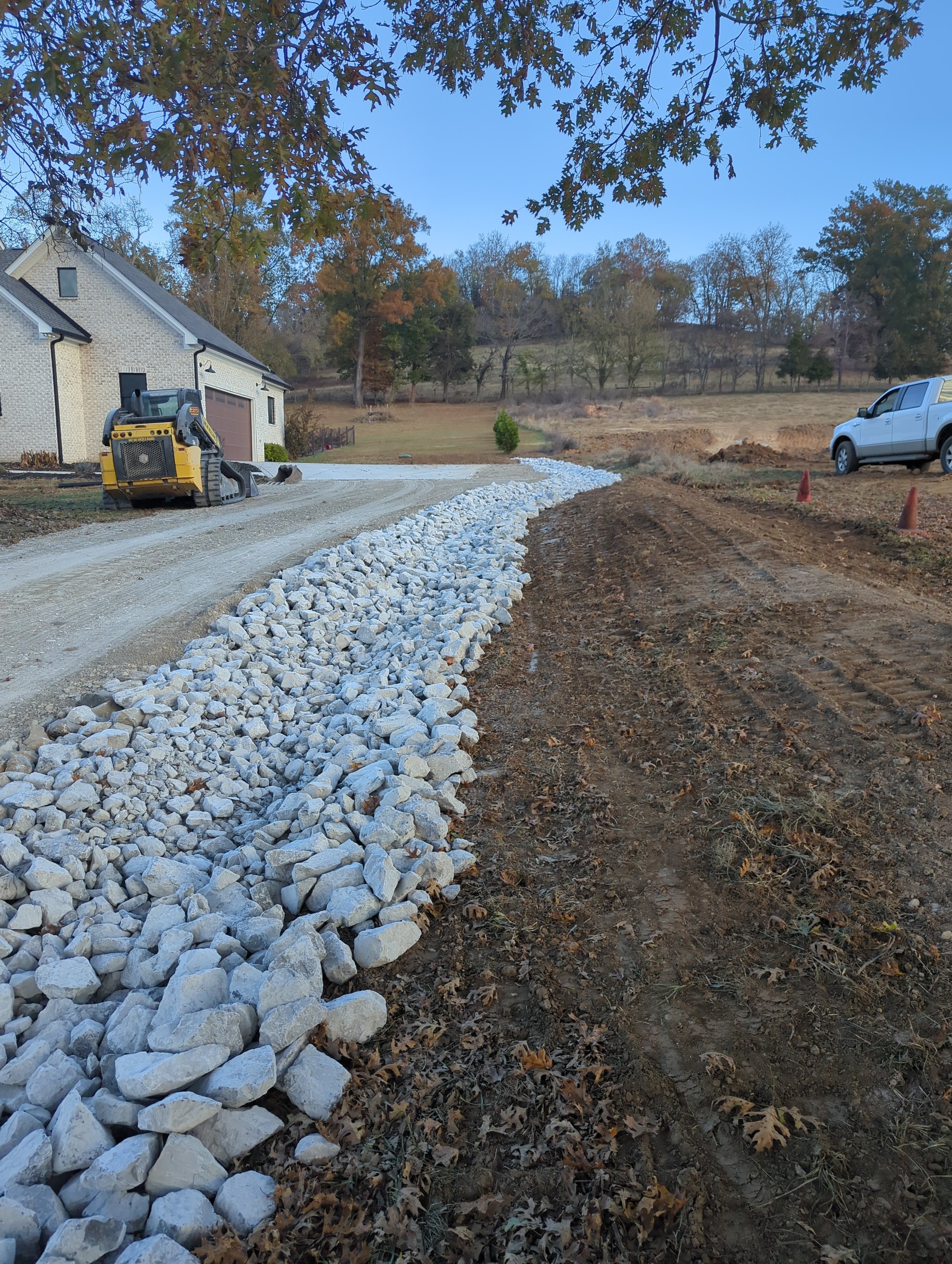
When I first looked at this Maury County property, the homeowner was watching a new house go up next door. With the neighboring lot being graded, he was concerned that stormwater would be directed toward his garage. An erosion path had already developed in that area, and he didn't want more concentrated runoff making it worse.
There was a separate problem behind his own house. Water collected in a low spot near the pool, stayed there after rain, and was making its way under the foundation into the crawlspace.
Those problems were connected by the lay of the land, but they didn't need the same fix. The runoff approaching from next door needed a better surface route. The standing water behind the house needed a collection point and an underground outlet.
That's why I started with the elevations and the destination, not with a shopping list of pipe.
The Berm Was the Key to Redirecting the Neighboring Runoff
The most important part of the surface drainage work was a new earthen berm along much of the property-line ditch. Its job was not to drain the crawlspace. Its job was to keep runoff approaching from the neighboring property from entering the existing erosion route near the garage, and guide it toward a drainage path farther down the property.
I excavated and shaped approximately 150 feet of open drainage ditch along the property line. Then I built up the far side of much of that ditch to form a berm. Together, that raised grade and the channel provide a more deliberate route for water that otherwise could have cut into the yard closer to the house.
Instead of allowing that runoff to enter near the garage, the route carries it toward the established drainage path roughly 150 feet farther down the property.
This is the part of the job I want people to notice in the finished photos: the rock-lined channel on one side and the raised, shaped earth on the other. The berm isn't just leftover excavation soil. Its location and elevation are what make the surface drainage plan work.
Why I Lined the Ditch With Riprap
An open ditch can move a lot of runoff, but a bare soil channel can also erode when water begins concentrating in it. I lined the new ditch with riprap from end to end to give the water a more resistant path and reduce the chance of the freshly excavated channel washing out.
The ditch also gave me a useful place to daylight the new underground drain from the backyard. One outlet could serve the water collected at the low spot, while the open channel handled the separate surface runoff along the property line.
The point wasn't to stop water from moving downhill. It was to control where it moves and protect the ground along the way. More on that approach on our erosion control page.
Giving the Low Spot Behind the House a Way Out
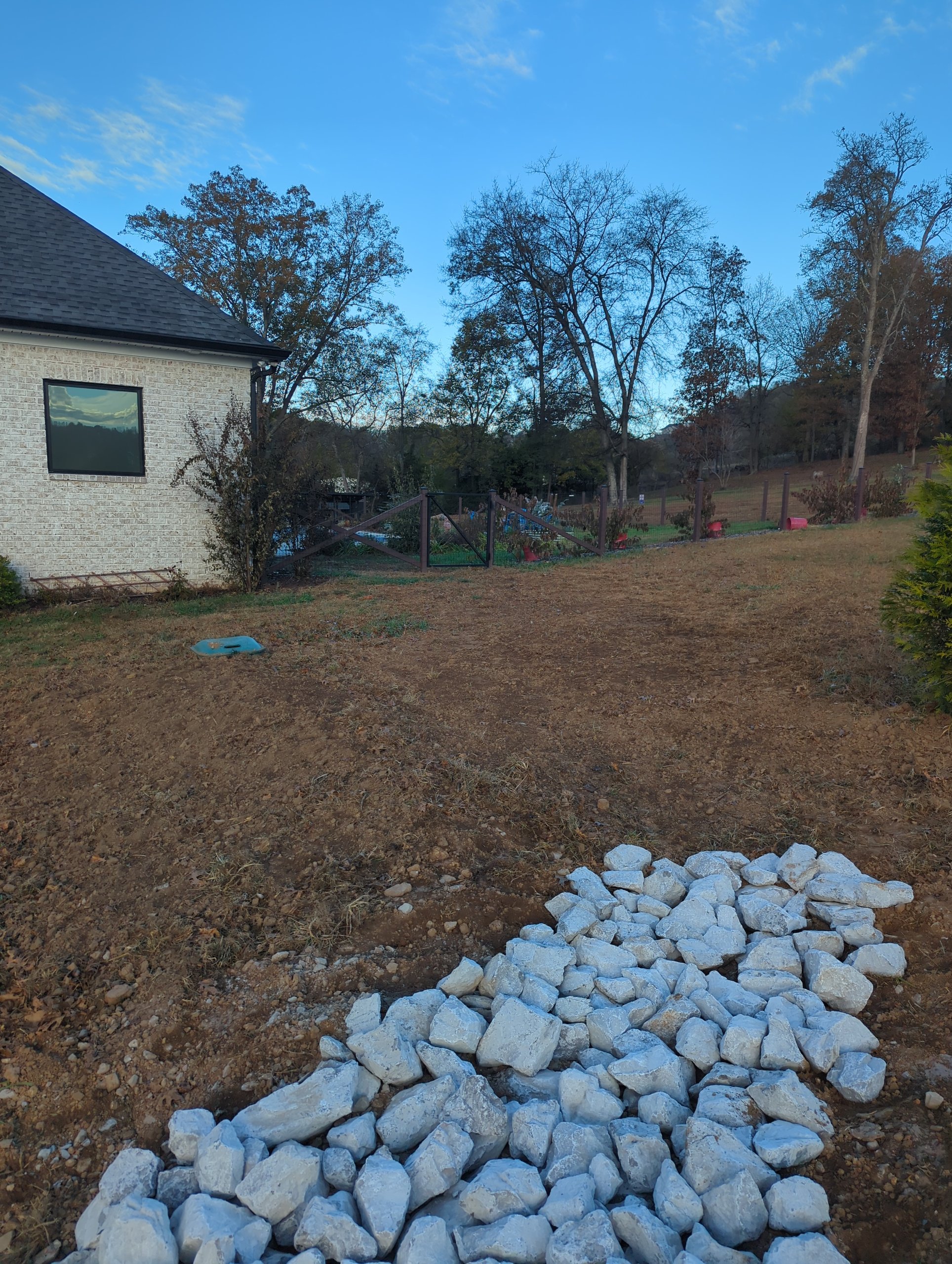
The area near the pool needed a different approach. Surface water was collecting there, and the homeowner had already seen moisture getting under the foundation and into the crawlspace.
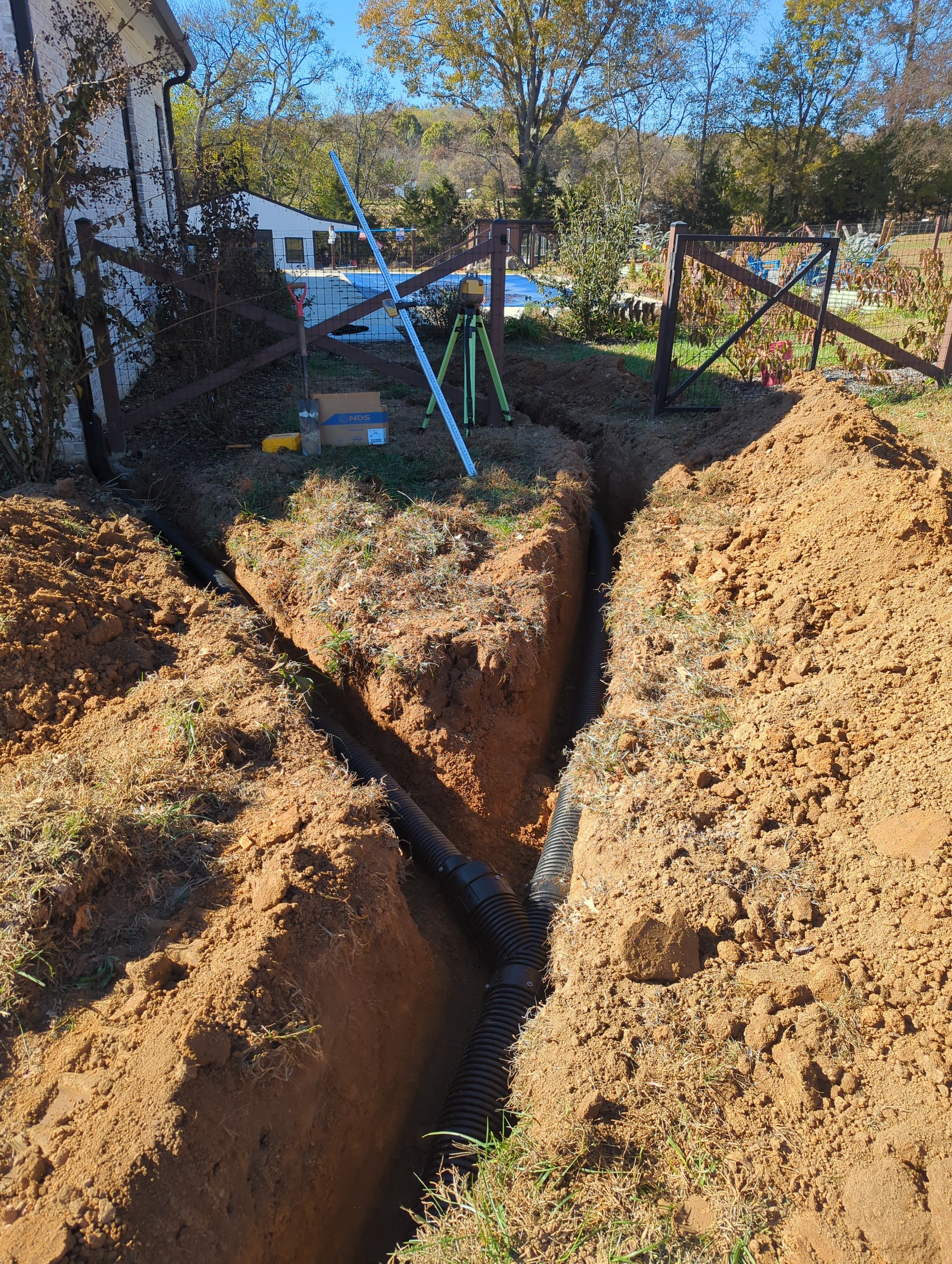
I installed a 12-by-12-inch catch basin at the low point and ran approximately 60 feet of 6-inch underground drainpipe to the new ditch. Rather than ending the line at a pop-up emitter in the lawn, I daylighted the pipe into the riprap-lined channel.
I also tied an existing downspout into that 6-inch drainage line and adjusted a portion of the backyard grade so runoff had a more direct path toward the new drainage route. The goal was simple: give water that collects behind the house somewhere appropriate to go instead of leaving it trapped beside the foundation.
Four Drain Outlets Were Buried Under the Landscaping
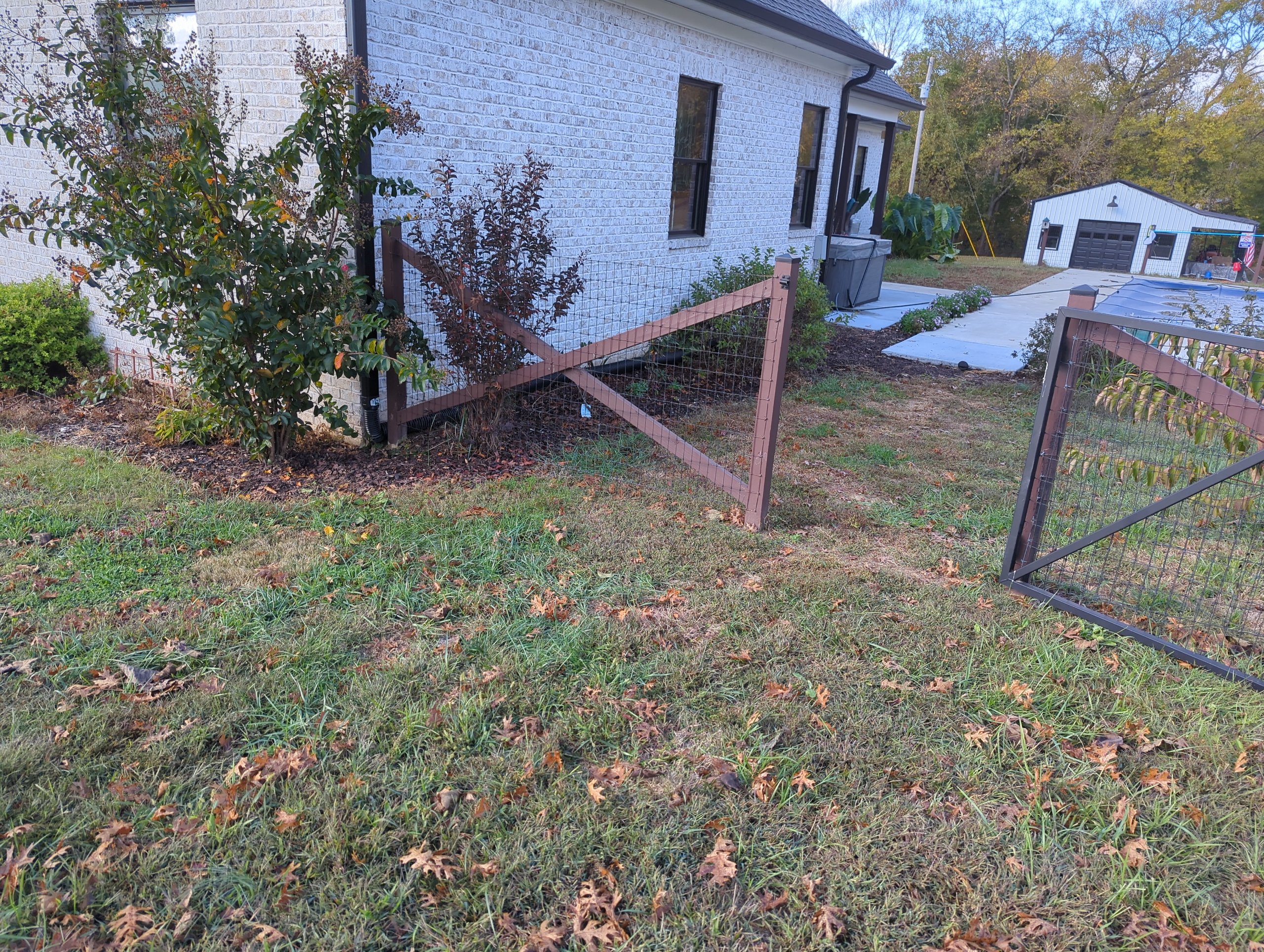
While working around the house, I found another issue: four pop-up drain emitters had been buried beneath approximately two feet of soil during earlier landscaping work. A pop-up outlet is supposed to discharge at the surface. Buried that deeply, it can't do that job as intended.
I extended those lines farther into the yard and installed new emitters at accessible surface locations. I also corrected several gutter-to-drainpipe adapters that had been installed incorrectly, and extended another backyard downspout so it would release water farther away in the side yard.
Those aren't the most dramatic parts of the project, but they're important. A buried or poorly connected downspout system can send roof water right back into an area you're trying to keep dry.
Two Water Problems, Two Different Fixes
This job is a good example of why I don't recommend the same drainage product for every wet spot. On this property:
- The berm and approximately 150-foot riprap ditch address approaching runoff and the established erosion route near the garage.
- The 12-by-12-inch catch basin and approximately 60 feet of 6-inch pipe collect standing water behind the home and daylight it into that ditch.
- The downspout and emitter repairs restore discharge points that had been buried or connected improperly.
Final seed and erosion-control blanket are included in the project scope for disturbed soil, but that restoration is not shown in these job photos. The photographs document the drainage work and site conditions, not a completed lawn restoration.
The installed improvements give the property defined water paths rather than leaving runoff to find its own route through low spots and eroding soil. I won't claim the system has passed a heavy-rain test that I haven't documented. What these photos do show is the work that went into shaping the routes and connecting the drains to an open outlet.
CANDO Field Note: Pipes are tools, not the answer to every problem. On this job, the most important part was choosing where the water should travel. The berm and channel dealt with the runoff along the property line; the catch basin and pipe dealt with the trapped water behind the house.
Have a Drainage Problem in Maury County?
If you're seeing water collect near your home, wash out a drainage channel, or come onto your property from neighboring ground, I can walk the site with you and work through where the water is coming from and where it can realistically go.
I provide residential drainage corrections, grading, riprap erosion control, catch basins, and downspout drainage improvements throughout Maury County, Tennessee.
CANDO Drainage & Grading — Do It Once. Do It Right. Start With Drainage.