

Erosion Control · Middle TN
Stop The Washouts.
Stabilize For Good.
Residential erosion control, slope stabilization, and drainage-driven erosion repair built to hold up to Tennessee storms — not just survive the next one.
- Free Estimates
- Licensed & Insured
- Locally Owned
Sound Familiar?
We Fix These Every Day.
- Washed-out areas after every storm
- Bare hillside losing soil and grass
- Mulch and topsoil disappearing downhill
- Gullies forming in the yard
- Exposed roots and undercut walkways
- Sediment washing onto driveways or neighbors
Recent Work
Real Results On Real Properties.
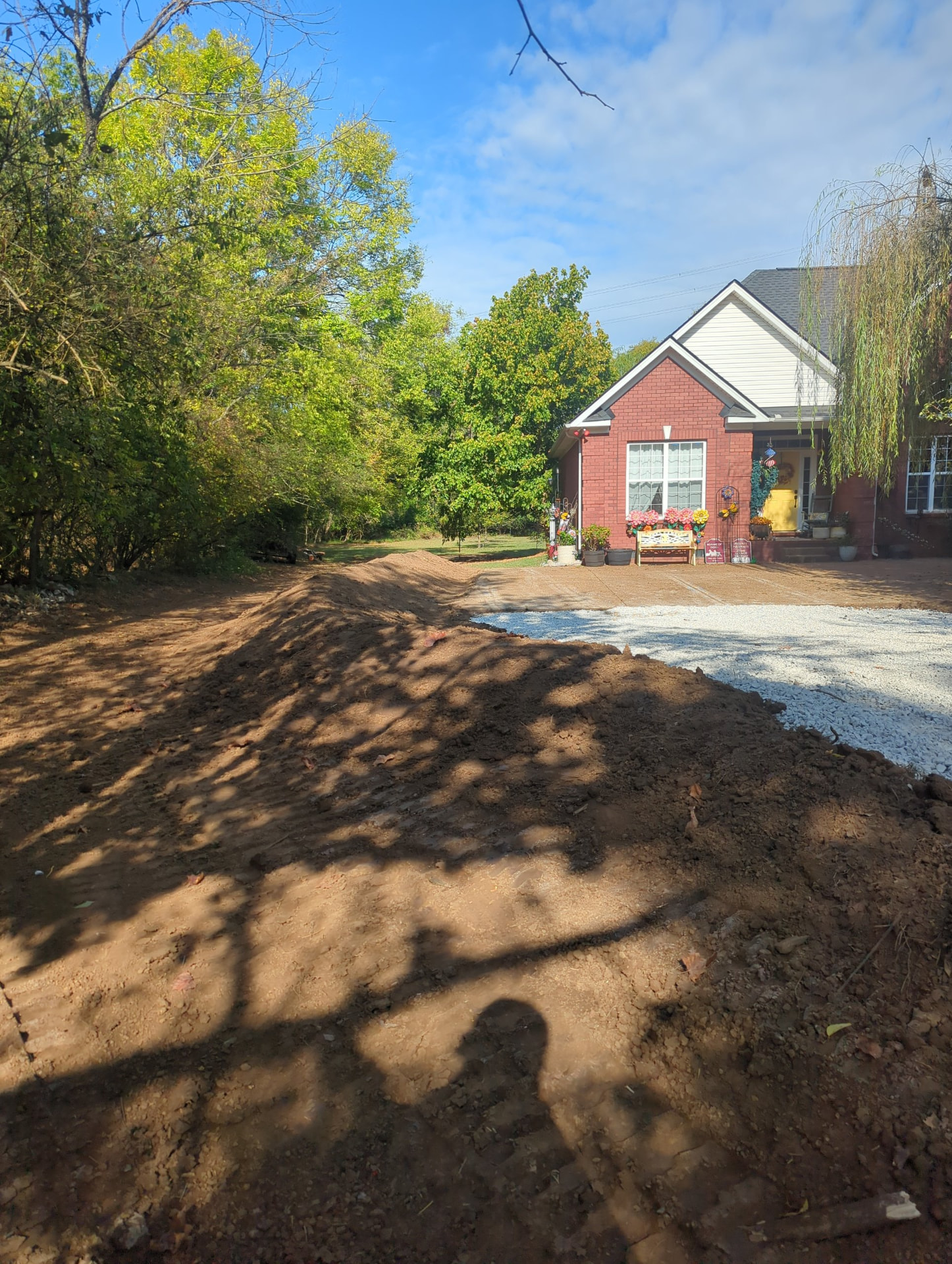
Stormwater Diversion & Raised Driveway Berm — Spring Hill, TN
Upstream stormwater redirected with a raised driveway crossing, approximately 150 feet of protective berm, and precise interior grading.
View Project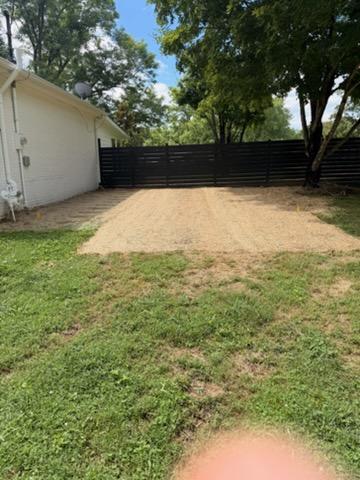
Williamson County Backyard Grading & Downspout Drainage Project
Negative grading and clogged buried downspouts corrected to keep water out of a basement.
View Project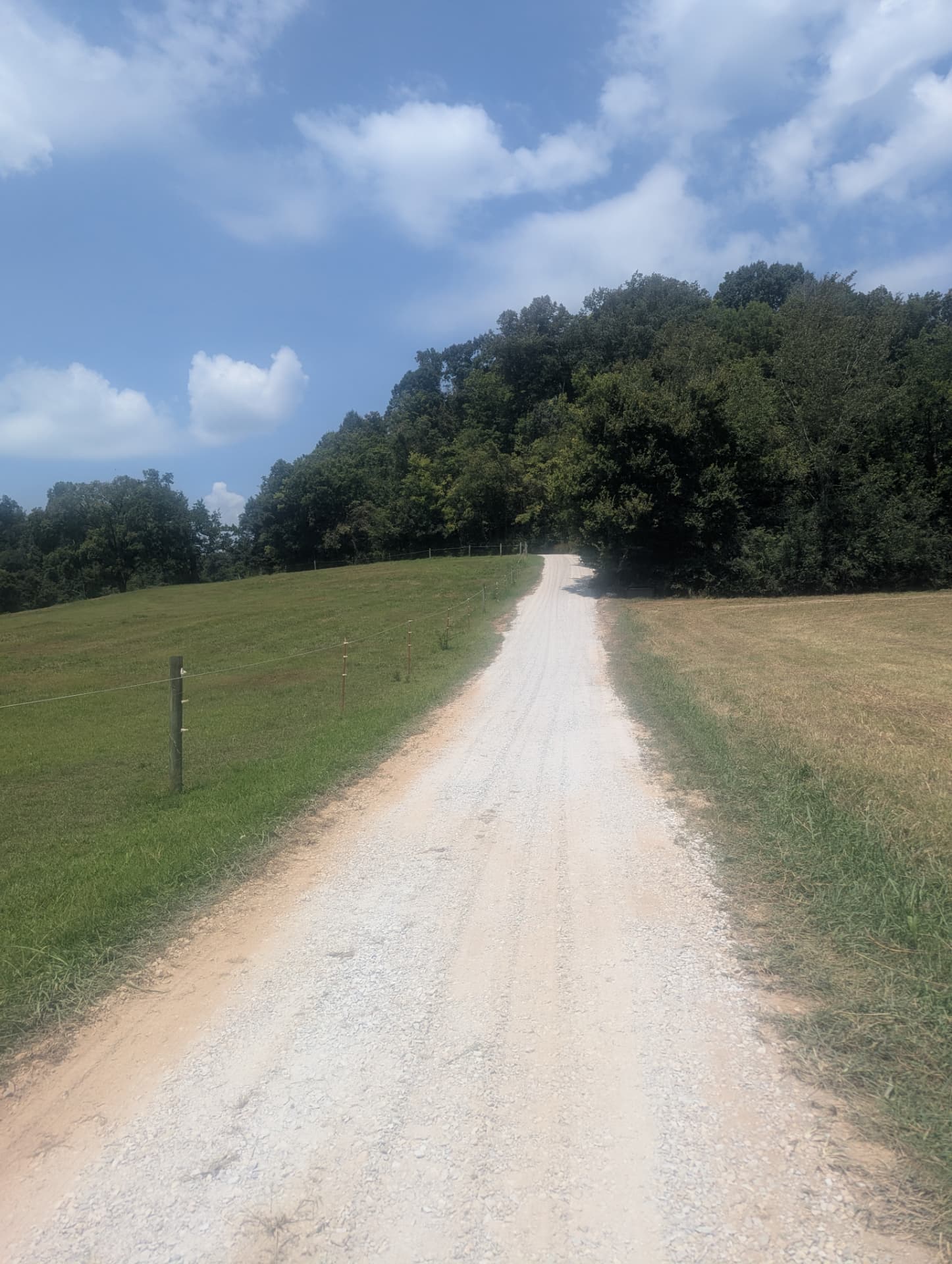
Driveway Erosion Repair & Berm Protection — Columbia, TN
Gravel driveway washouts rebuilt and resurfaced, with berm shaping and a lowered overflow spillway near a walkout basement.
View ProjectWhat We Do
Done Right The First Time.
Slope Stabilization
Reshape, anchor, and replant slopes so soil stays where it belongs.
Hillside Erosion Repair
Rebuild washed-out hillsides with proper grading and ground cover.
Runoff Diversion
Swales, berms, and surface drains to break up destructive runoff.
Rip-Rap & Rock Armoring
Engineered stone protection where water concentrates and hits hardest.
Washout & Gully Repair
Rebuild eroded areas with compacted fill, proper grading, and surface stabilization.
Drainage-Driven Repair
Most erosion is a drainage problem in disguise — we fix the source.
Our Process
Simple. Honest. Thorough.
- 1
On-Site Erosion Inspection
We walk the property, find the source of the runoff, and identify what's actually washing away.
- 2
Written Plan & Estimate
A clear, written erosion control plan and estimate — no pressure, no surprises.
- 3
Build It To Last
Reshape, armor, drain, and replant. Done in the right order, by people who do this every day.
Ready to stop losing ground?
Why Cando
Neighbors Who Show Up.
- Family-owned and operated in Middle Tennessee
- Free, no-pressure on-site quotes
- Modern equipment — clean, careful work
- Clear communication from quote to clean-up
FAQ
Common Questions.
+What's the most effective way to stop erosion on a slope?
It depends on slope steepness, soil type, and where the water is coming from. Effective long-term solutions almost always combine three things: redirecting the water before it hits the slope, regrading and reshaping the slope itself, and stabilizing the surface with vegetation, matting, or stone. We design every job around those three pillars.
+Can you fix erosion that's already washed out my yard?
Yes. We rebuild gullies, washouts, and undermined areas with compacted fill, proper grading, and erosion control fabric or rip-rap where needed. We also address the drainage problem that caused it — otherwise it'll wash out again.
+Can grading and drainage alone solve my erosion problem?
In most residential cases, yes. Reshaping the slope, diverting water before it reaches the slope, armoring with stone where runoff concentrates, and re-establishing ground cover will solve the majority of erosion problems we see in Middle Tennessee. CANDO focuses on drainage, grading, and erosion repair — we do not build structural retaining walls. If your project ever requires one, we'll tell you up front.
+How much does erosion control cost?
Residential erosion control projects in Middle Tennessee typically range from $1,500 for small repairs to $15,000+ for large slope stabilization jobs with rock armoring. Every estimate is free and written.
+Are you licensed and insured?
Yes. CANDO LLC is fully licensed and insured in the state of Tennessee.
+What areas do you serve?
Columbia, Spring Hill, Franklin, Thompson's Station, Chapel Hill, Lewisburg, Santa Fe, and the surrounding Maury and Williamson County areas.
Still have questions?
Visit our Frequently Asked Questions page.
Residential Erosion Control Contractor in Middle Tennessee
Erosion is rarely the real problem — it's the visible symptom of a water problem. Too much runoff, moving too fast, in the wrong place. With more than 20 years of excavation experience stabilizing slopes and repairing washouts, my erosion work always starts with the same question: where is this water coming from, and how do we slow it down or move it somewhere safer before it takes any more soil with it?
What I Look For First
When I walk an eroded slope, I'm following the water backwards. The gully or washout you can see is the end of the story — I want to see the beginning. I trace it uphill to find where the concentrated flow starts. Is it a downspout? A driveway shoulder that's channeling runoff onto the slope? A neighbor's yard? A gap in the cover crop where soil is exposed? Until I know where the water starts, I can't stop it from continuing to damage the property.
I also look at what's holding the soil right now: root systems, ground cover, existing vegetation, exposed subsoil. A slope with mature root systems will resist erosion far better than a freshly cleared cut, no matter what fabric you put over it.
Why Erosion Starts
Almost every erosion problem I see comes from one of three sources: sheet flow (a thin layer of surface water moving across bare or thin ground), concentrated flow (water pinched into a small channel and gaining speed), or a loss of vegetation that used to hold the surface together. On Middle Tennessee's rolling terrain, once the surface breaks and a small channel forms, the water accelerates, cuts deeper, and the problem compounds fast. What was a small wet spot last spring becomes a two-foot gully by the next summer if nothing is done.
Mistakes I Commonly See
Dumping a load of rock into a gully without addressing where the water is coming from. A row of timbers stacked across a slope — they look great for a season, then rot and release everything they were holding back. Loose mulch on a steep slope, which just washes downhill with the first heavy rain. Reseeding a bare slope in the middle of summer with no straw blanket to protect the seed. And, most commonly, chasing the symptom (the washout) instead of the cause (the runoff).
The other one I see a lot: assuming erosion needs a big engineered wall. On most residential properties, the right combination of regrading, drainage diversion, rock armoring at the outfall, and revegetation will solve the problem for a fraction of the cost — and require less maintenance long term.
How I Usually Solve It
My erosion approach is layered. First, divert the water before it hits the slope — a swale, a berm, a downspout extension, or a piped run to a safer discharge point. Second, reshape the slope itself if the grade is contributing to the problem. Third, armor the places where concentrated flow is unavoidable, using properly sized rip-rap on a prepared bed. Fourth, protect the surface with straw blanket, erosion control fabric, or vegetation appropriate for the exposure. Roots are one of the strongest long-term stabilizers we have — I want them working for us. For related work see our grading solutions and drainage solutions pages.
Hillside and Slope Stabilization
Middle Tennessee's rolling terrain is part of what makes this area beautiful — and part of why erosion is so common. Steep yards, cut slopes behind new construction, and lots carved into hillsides all share the same vulnerability: gravity and water working together. I stabilize slopes with the right combination of regrading, rock armoring, drainage diversion, and revegetation for your specific soil and grade.
Yard Erosion Repair and Soil Loss
If you've watched topsoil, mulch, or grass slowly disappear off your yard, you already know how expensive erosion gets over time. I rebuild eroded areas with proper fill, compaction, and grading, then put a permanent control system in place so it doesn't happen again.
What You Can Do Yourself
A few things anyone can do before it turns into a big repair: keep gutters clean and downspouts extended well away from any slope, don't leave bare soil exposed through the winter (a straw blanket or cover crop makes a real difference), avoid mowing steep slopes so short that the grass can't hold the surface, and watch where sheet flow is starting to concentrate. Catching a small bare patch and reseeding it with protection beats letting it turn into a gully every time.
When To Call Me
If soil is disappearing after every storm, if a bare hillside is getting worse each year, if you're seeing sediment wash onto driveways or into a neighbor's yard, or if a small washout is turning into a real gully, that's the moment to have someone look at it. The longer erosion runs, the more expensive the fix — and the more of your yard goes with it.
Get an Erosion Control Estimate
If you're tired of watching your yard wash away, let's get a plan in place. Call 931-442-5060 or request a free on-site erosion estimate. I'll walk the slope with you, explain what's happening, and give you a written plan to fix it for good.
Keep Exploring
Keep Learning
Service Areas
Serving Homeowners Across Middle Tennessee
Also serving Thompson's Station, Chapel Hill, Lewisburg, and Santa Fe.