
CANDO Project Center · Columbia, Tennessee
Driveway Erosion Repair & Berm Protection
A rural Columbia property had two separate stormwater problems: a long gravel driveway that was washing out on the steepest slope, and a walkout basement protected by a berm that needed more height and a better overflow path during heavy rain.
- Location
- Columbia, TN
- County
- Maury County
- Project Type
- Driveway Repair & Drainage Protection
- Primary Issue
- Long gravel driveway washouts and runoff near a walkout basement
- Solution
- Surge-stone rebuild, crusher-run resurfacing, berm raising and shaping, lowered overflow spillway, seed and erosion blanket
This Columbia property had the kind of driveway problem that starts small and keeps getting worse every time water chooses the same path.
The driveway was roughly a quarter mile long, and one steep section had become the main channel for hillside runoff. That section was eroded badly enough that I had to put my truck in four-wheel drive just to get up it. Past that main slope, there were several smaller washout areas and potholes where stormwater was crossing the driveway and cutting through the gravel.
The house also had a separate drainage concern near a finished walkout basement. An existing berm was protecting the basement side of the home during normal rains, but during wet-season conditions and larger storms, the system needed a stronger safety margin.
The Driveway Problem
The main driveway issue was not just a lack of gravel. The steep section was acting like a water channel.
When hillside runoff is allowed to run down a gravel driveway, it starts pulling fines out of the surface. Once that happens, the driveway loses its ability to pack tightly. The next rain follows the same path, cuts deeper, and eventually creates ruts, potholes, and loose stone that will not stay where it belongs.
A full long-term correction could have included culverts, ditch-line improvements, and outlet protection with larger stone or riprap. That was discussed as a larger future phase. For this first phase, the homeowner chose a practical driveway repair that focused on the worst erosion now and improved the rest of the driveway enough to get it back into good working condition.
How the Driveway Was Repaired
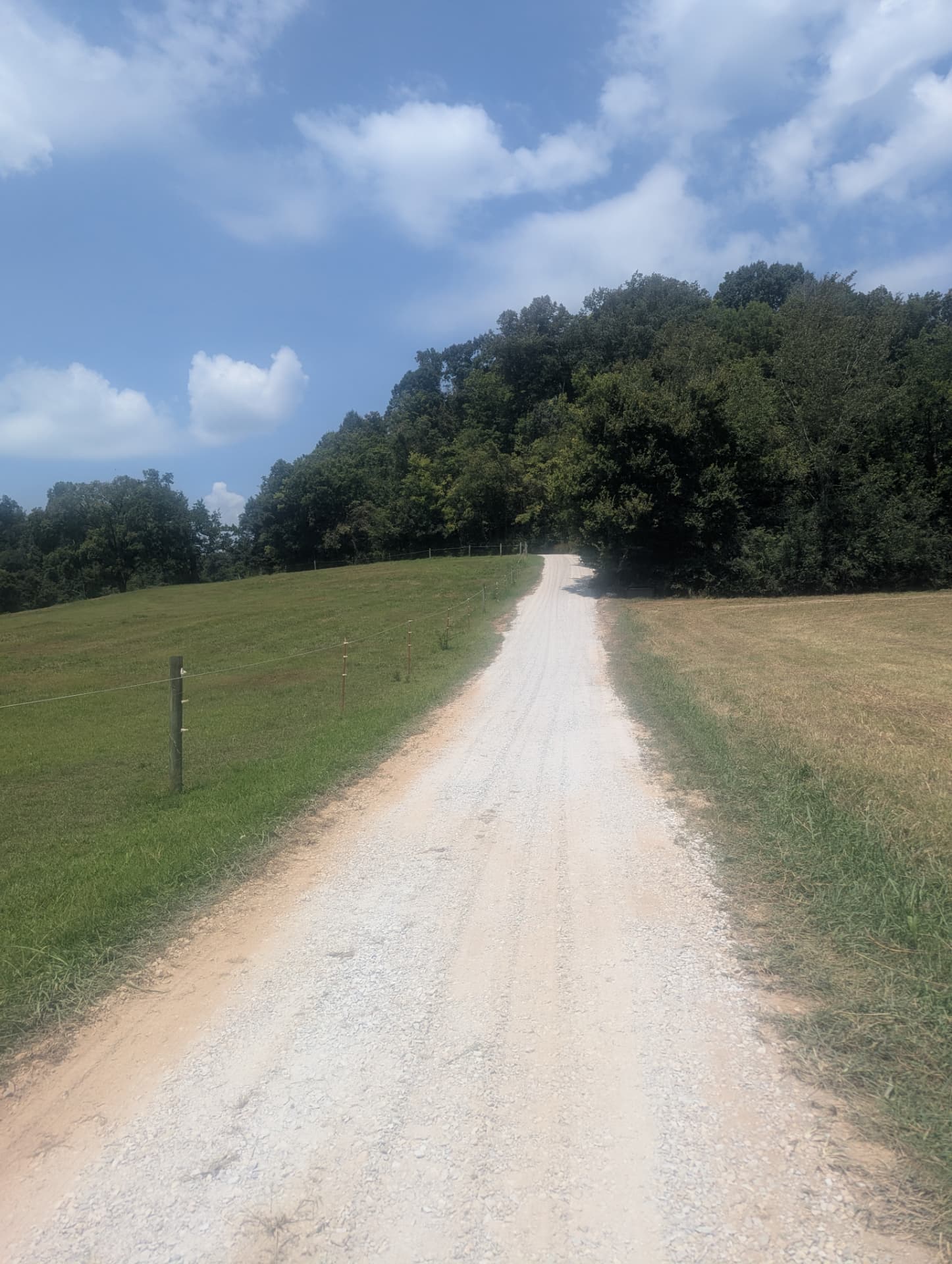
The steep eroded section was tuned up and rebuilt with surge stone first. For this project, I used three loads of surge stone, which is a 3-inch-down-to-fines limestone.
That is one of my favorite stones for this kind of repair because it has both larger stone and smaller material mixed together. The bigger pieces help bridge and stabilize rough erosion areas, while the smaller stone helps lock everything together once it is shaped and compacted. That material behavior is one of the things I covered in what homeowners should know about soil and aggregates.
After the worst subgrade areas were repaired, the slope was topped with 3 to 4 inches of crusher run and compacted into place for a finished driving surface.
The rest of the quarter-mile driveway was spot-repaired. Any bad potholes or smaller erosion cuts were dug out where needed, reestablished with a better base, topped with crusher run, shaped, and compacted. The goal was not to completely rebuild the entire driveway in one phase. The goal was to fix the areas that were failing fastest and leave the full driveway in much better condition.
The Basement Drainage Concern
The second part of this project was near the walkout basement.
The home already had a berm that helped protect the basement side of the house. In normal rain, an overflow pipe helped route water around the house toward a drainage pond near the front of the property.
The concern was what happened during wet-season conditions or a larger storm. If the pond filled up and the overflow system could not keep up, the berm could be overpowered. In that situation, water had the potential to move toward the finished walkout basement.
The existing site already had a spillway concept, but it was not low enough to work the way it needed to. Water needs a predictable place to go before it finds the wrong place on its own.
Raising the Berm and Lowering the Spillway
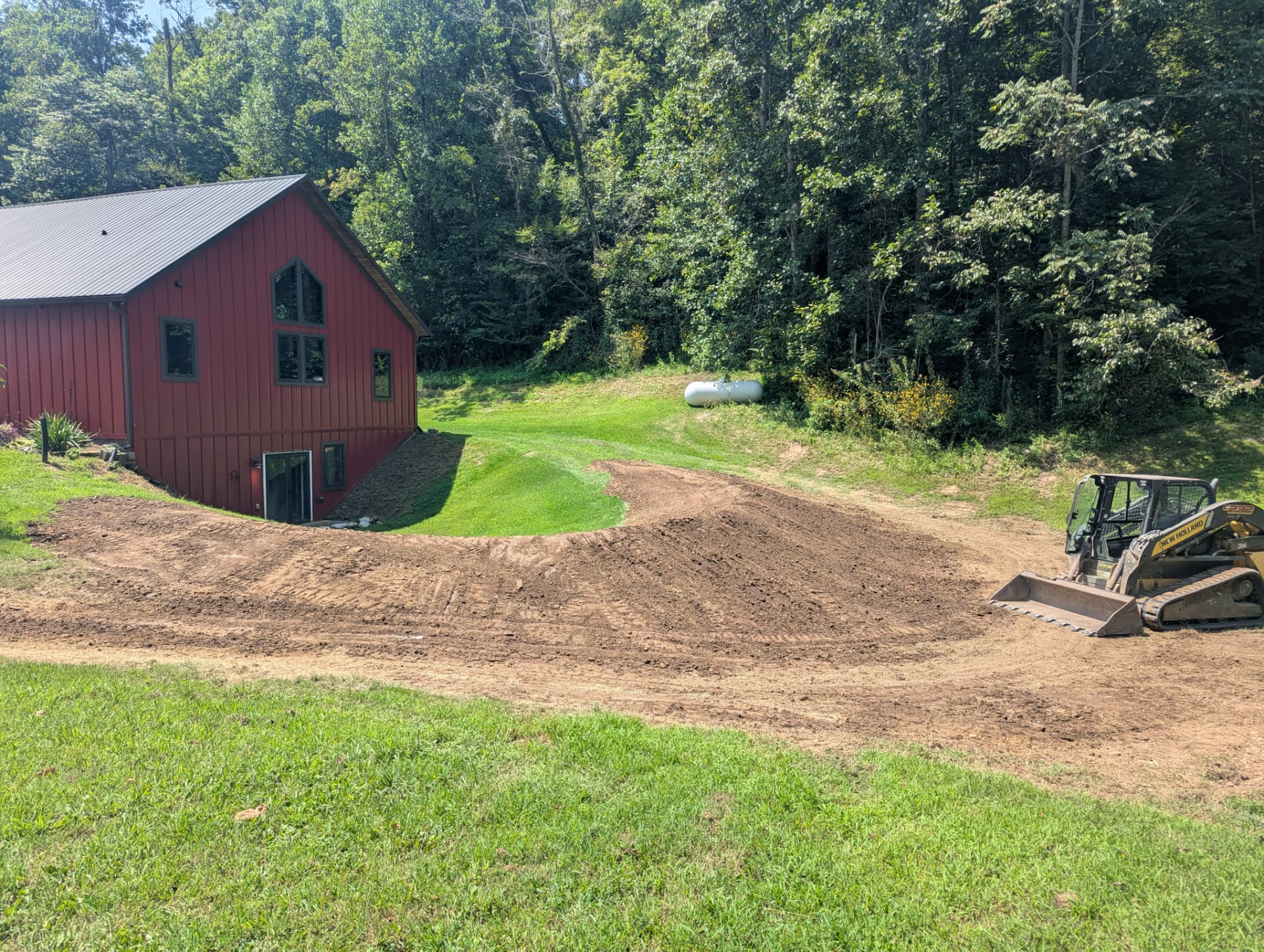
The drainage solution was simple but important: raise the berm and lower the existing spillway.
The berm was raised and reshaped to add protection near the walkout basement. At the same time, the existing spillway was lowered approximately 3 to 4 inches so that if water rises during a major storm, it has a better chance of leaving through the intended overflow route instead of pushing toward the house.
That detail matters. A berm by itself is not enough if there is no safe overflow path. Eventually, water will find the lowest point. The goal was to make sure the lowest practical overflow path was away from the basement, not into it. This is the kind of water-management thinking I use on any grading project near a home.
Stabilizing the Finished Grade
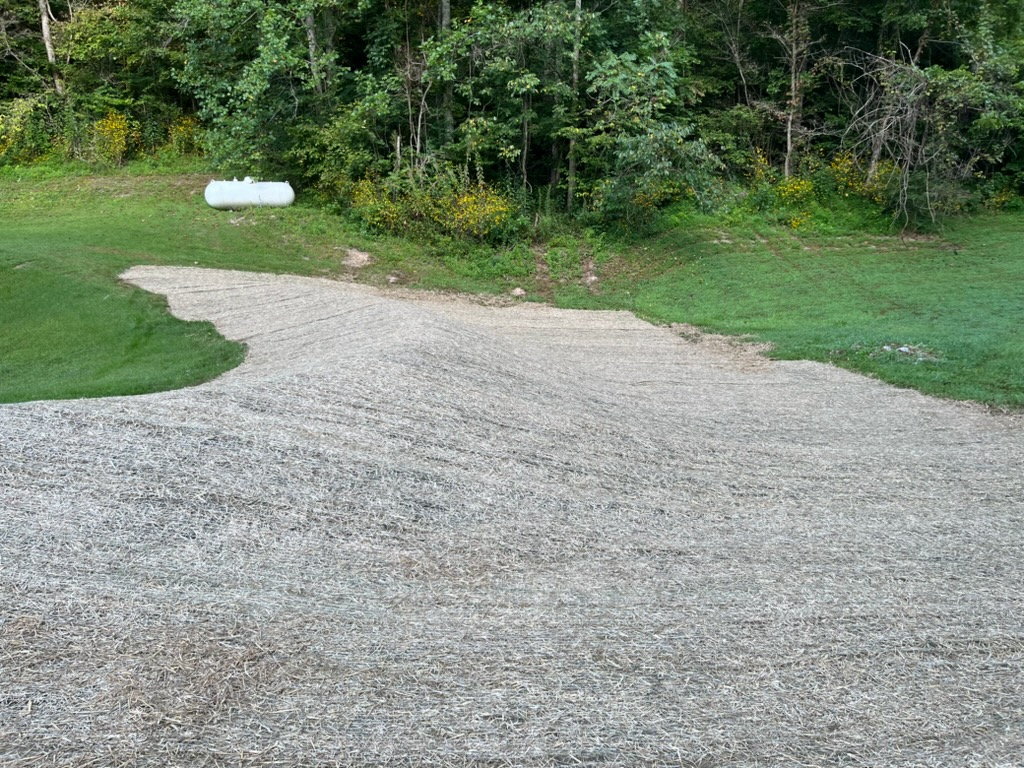
Any time soil is disturbed around a drainage area, it needs to be stabilized. Bare dirt and stormwater do not get along for long.
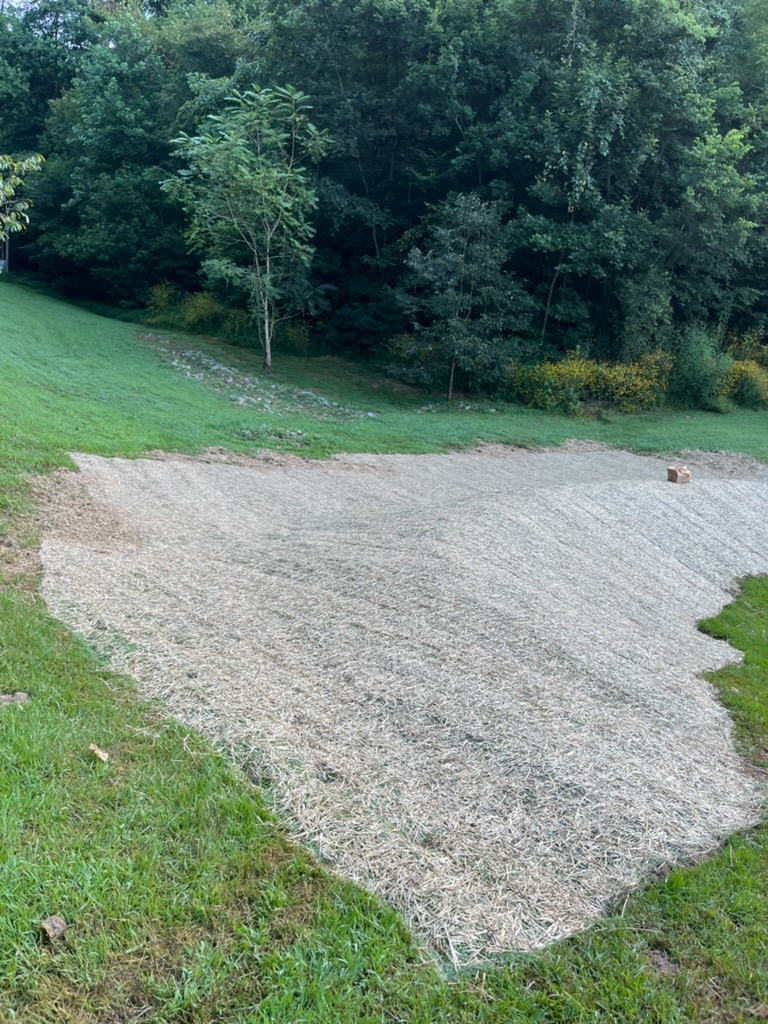
After the berm and spillway work was complete, seed and erosion blanket were installed over the disturbed area. The blanket helps hold soil and seed in place while the grass gets established. That gives the finished grading a much better chance of surviving rain before vegetation takes over. This is standard erosion control on any site I disturb.
The Finished Result
This project was a good example of doing the right amount of work for the phase the homeowner wanted.
The driveway is now in much better shape. The worst steep section was stabilized with surge stone, capped with crusher run, and compacted. Smaller potholes and washout areas along the rest of the driveway were spot-corrected instead of ignored.
Near the house, the berm now has more protection value, and the spillway gives stormwater a more controlled place to go during a large rain event. That does not mean any drainage system is guaranteed against every extreme storm, but it does mean the property has a better stormwater plan than it had before.
For rural properties in Maury County, driveway erosion and drainage are usually connected. If water is using the driveway, yard, or basement wall as its path, the answer is not just adding more stone. The answer is figuring out where the water is coming from, where it wants to go, and how to guide it there with the least future damage. I wrote more about that process in how to determine the right drainage solution.
Gravel driveway washing out every time it rains?
We'll walk the driveway with you, find where the water is getting on it and where it needs to leave, and tell you what actually needs to change first.
Driveway & Drainage Work in Columbia and Maury County
CANDO is a drainage-first residential excavation contractor working in Columbia and across Maury County. You can see more completed work in the Project Center, including a backyard drainage and erosion correction in Columbia that started with the same question this one did: where is the water coming from, and where should it go?
Erosion on a driveway is a water problem before it's a gravel problem.
If washouts, ruts, or runoff near your foundation are getting worse each season, CANDO can evaluate the water path and lay out what should be repaired first.
Frequently Asked Questions
Learn more about this type of project in our Frequently Asked Questions.
Visit our Frequently Asked Questions