
CANDO Project Center · Columbia, Tennessee
Backyard Drainage & Erosion Correction
Intercepting heavy off-site runoff, correcting two failing drainage paths, and giving stormwater a controlled route across the property.
- Location
- Columbia, TN
- County
- Maury County
- Project Type
- Residential Drainage & Grading
- Primary Issue
- Neighboring runoff, erosion and standing water
- Solution
- Catch basin, French-drain collection, 6-inch drainage pipe, grading and erosion control
This Columbia backyard had more than a standing-water problem. There were two separate drainage paths failing for two different reasons, and one of them was carrying a substantial amount of runoff from the neighboring property.
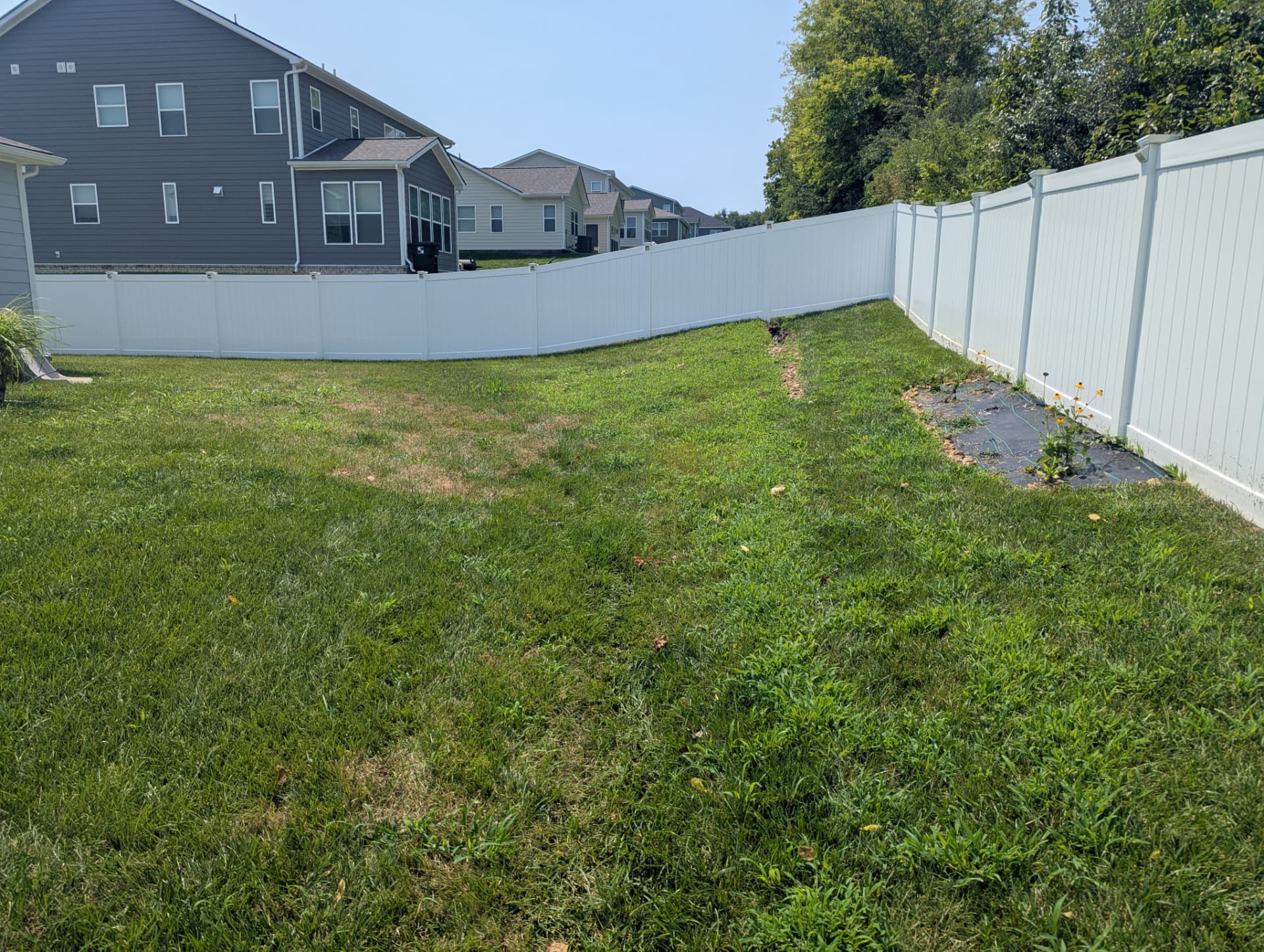
At the rear fence, water was entering from an uphill neighboring yard that already showed significant erosion. Based on what I observed on site, I estimated that roughly 150 gallons per minute could be entering this property during a heavy rain.
That concentrated flow had already started cutting its own path. It was undermining the existing rear drainage swale, washing soil through the yard and making the erosion progressively worse.
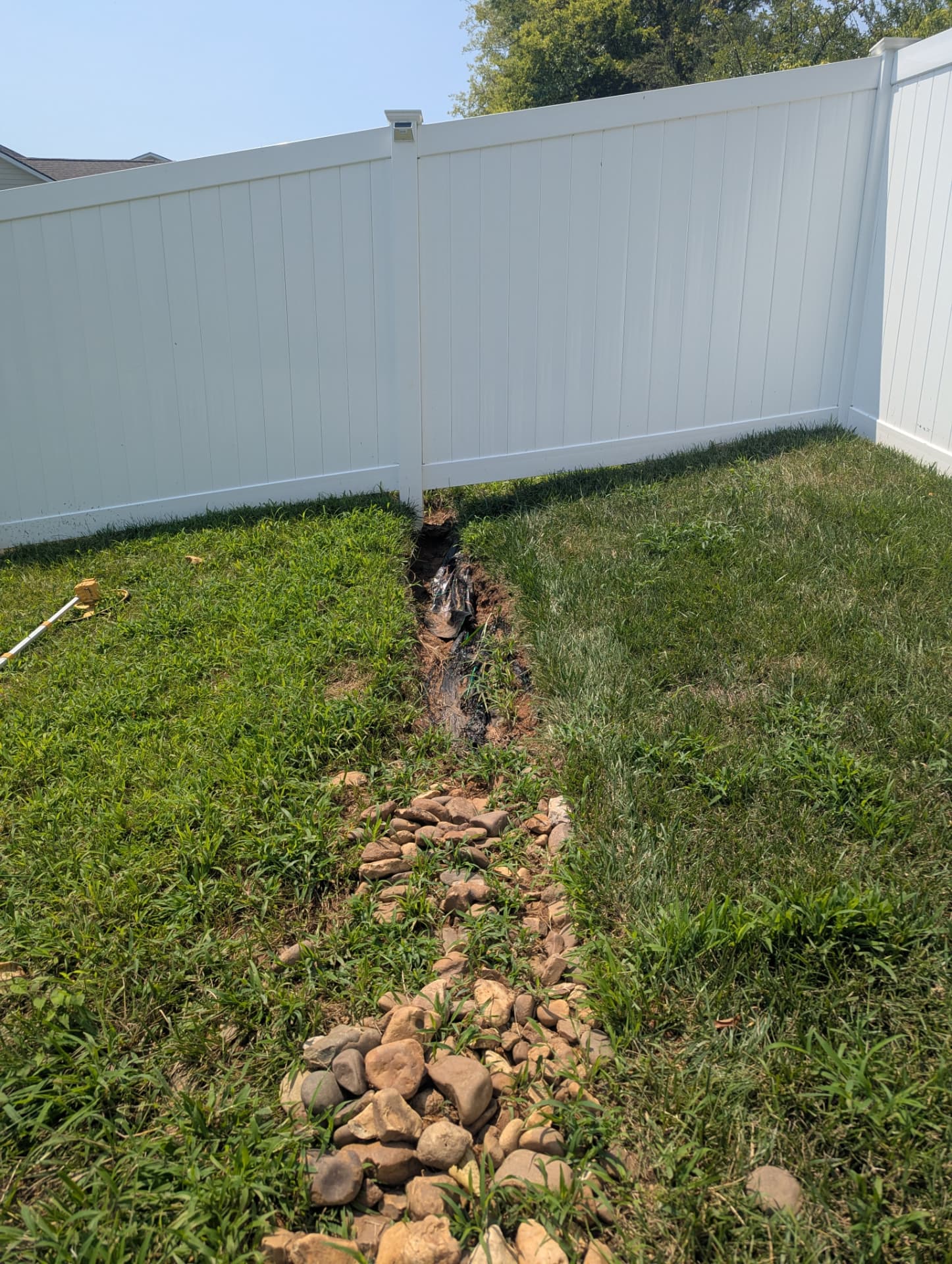
Farther down the backyard was a second drainage path. This one wasn't being overwhelmed by the same concentrated flow — the grade itself was the problem.
I found approximately 3 inches of back pitch in the affected area. Instead of continuing toward the lower side of the property, water was stopping there and sitting after a good rain.
So this wasn't a job where simply adding more pipe everywhere made sense. One part of the property needed the incoming water intercepted and controlled. The other needed the ground reshaped so surface drainage could work again — the same question I walk through in how to determine the right drainage solution.
Catching the Heavy Runoff Before It Crossed the Yard
The largest concentration of water was entering near the rear property line.
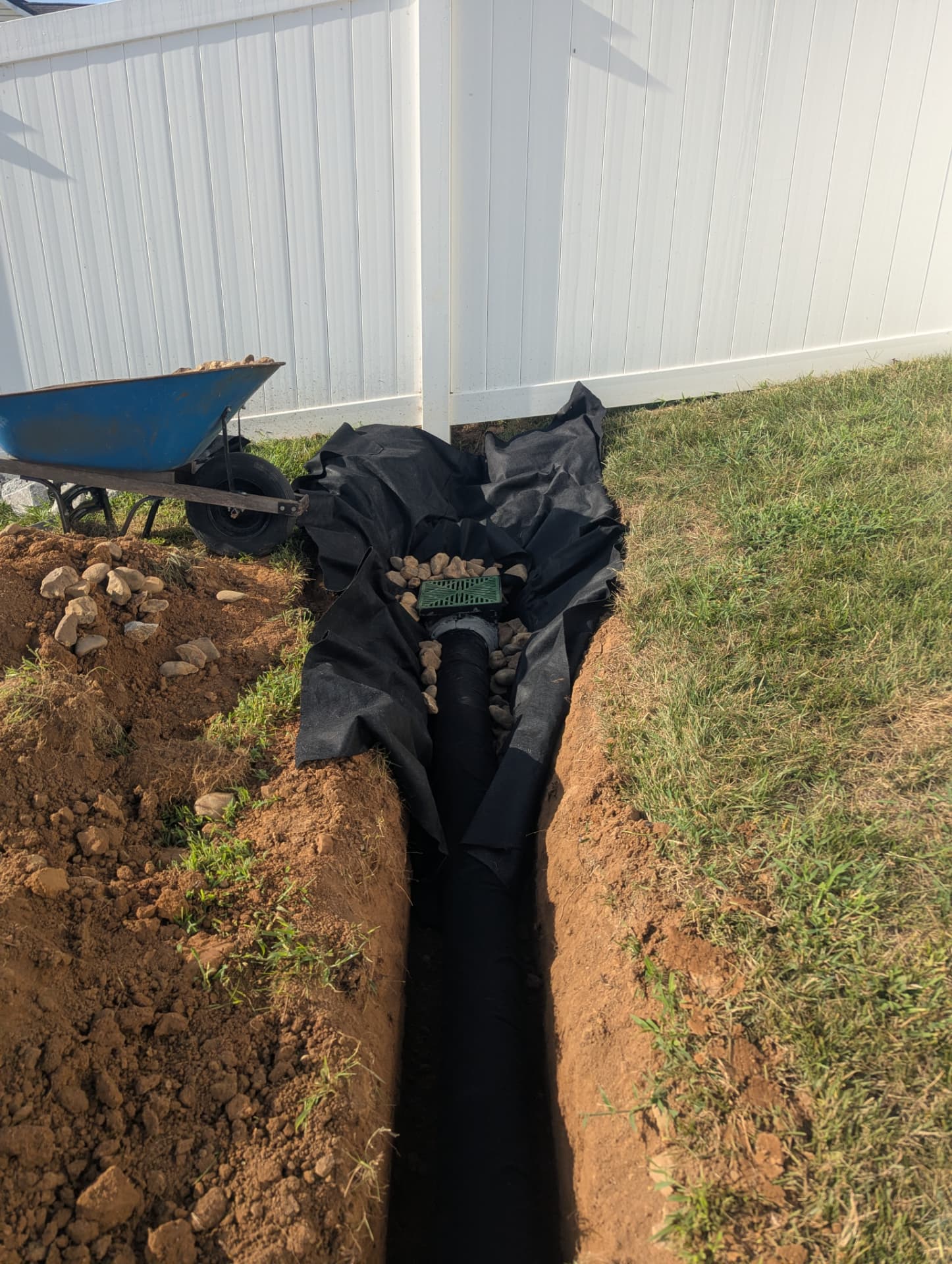
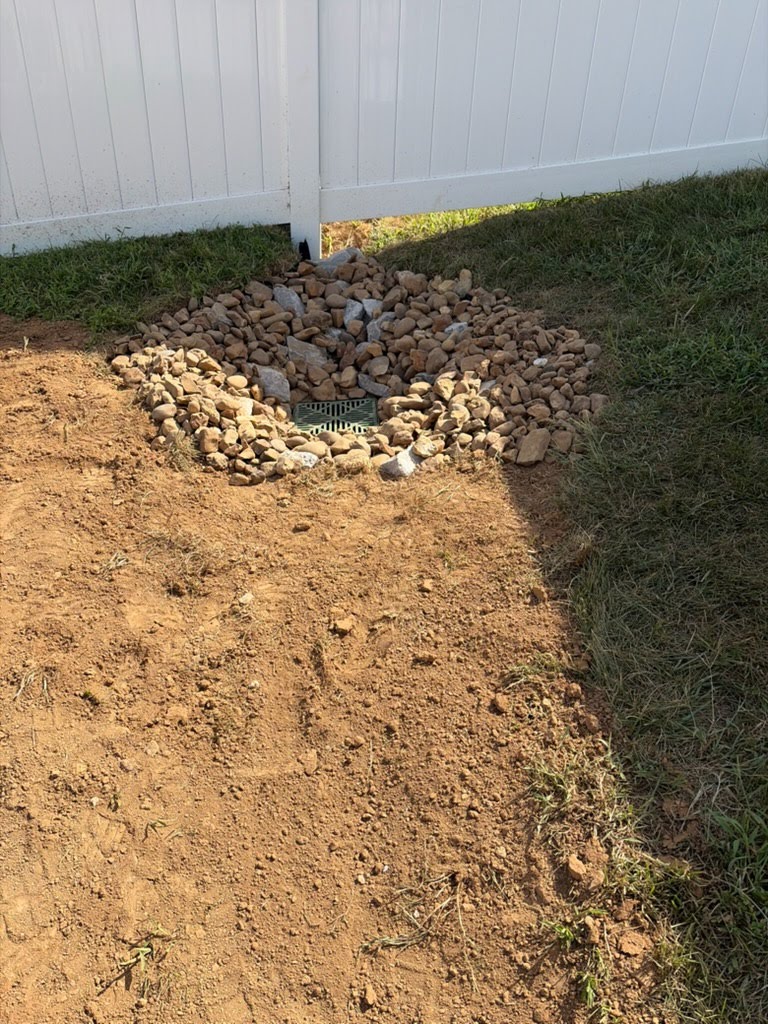
I installed a good-sized surface catch basin at that location to capture the concentrated stormwater before it could continue running through the homeowner's yard. Immediately around the collection point, I added approximately 5 feet of French-drain-style collection.
That gave the system two ways to receive water. The French-drain section can collect water moving through and across the surrounding soil during more typical rainfall, while the open catch basin provides additional surface capacity when a large amount of runoff reaches the property at once.
Because this was already a high-erosion location, I didn't want concentrated water cutting around the new inlet. The collection area was protected with filter fabric, larger riprap and approximately 1½-inch decorative stone to help stabilize the soil and slow the water as it enters the system — a stone choice I explain further in what homeowners should know about soil and aggregates.
Giving the Water Its Own Route Across the Property
Once that runoff was collected, the next goal was keeping it out of the newly corrected yard.
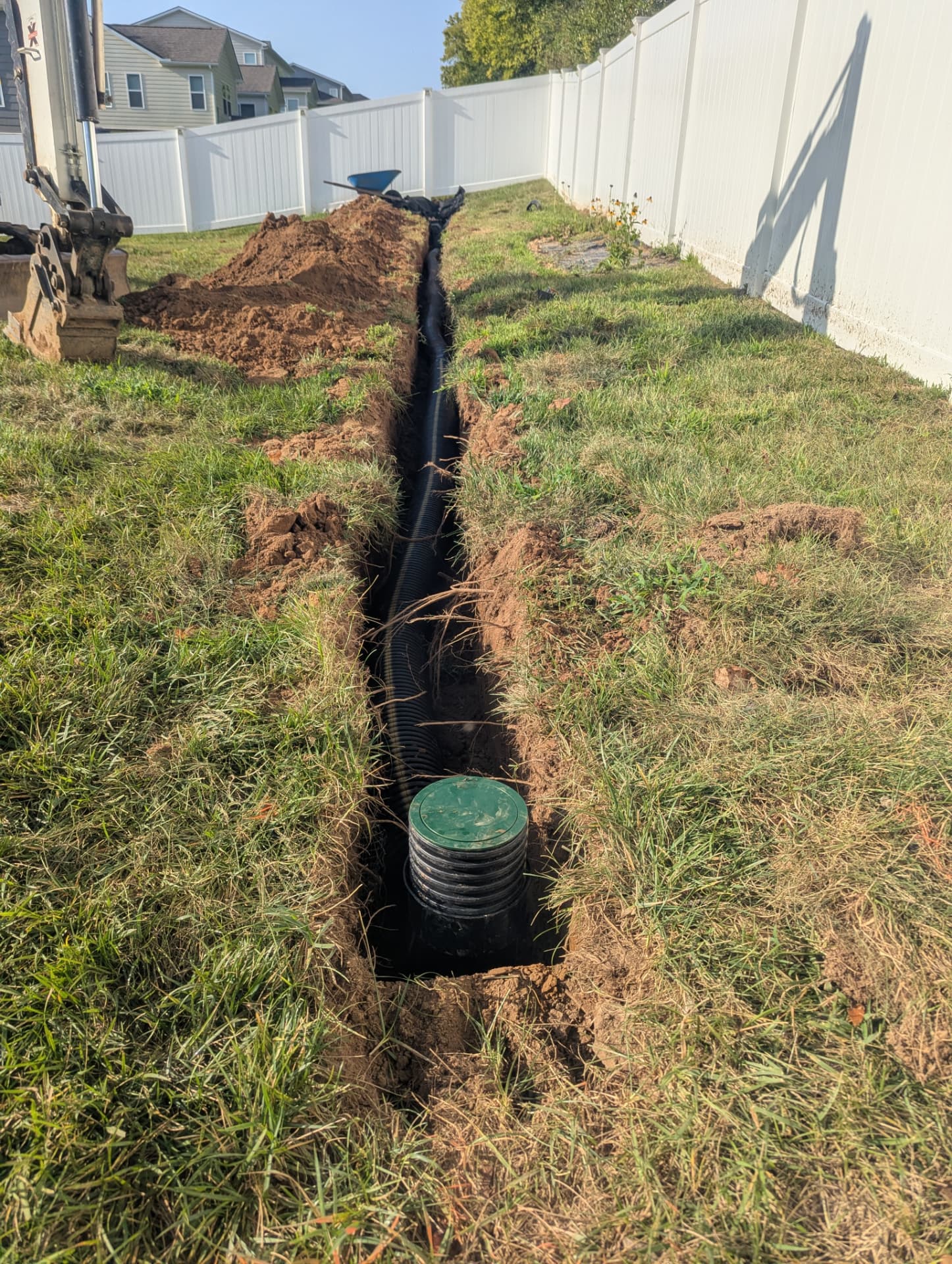
From the inlet area, I installed approximately 60 feet of 6-inch drainage pipe across the property. Rather than allowing that large volume of water to continue traveling over the lawn, the pipe gives it a dedicated underground route toward the opposite side of the backyard.
At the discharge end, I installed a pop-up emitter so the system could release water near the lower corner of the property. That outlet was also protected with erosion-control stone.
The inlet and outlet are important parts of a system like this. Moving a large amount of water through a pipe doesn't solve much if the water tears the ground apart where it enters or where it comes back out.
Runoff from a neighboring property washing through your yard?
Every property moves water differently. We'll follow the water path first and tell you what actually needs to change.
Fixing the Grade Instead of Piping Everything
The second drainage issue needed a different solution.
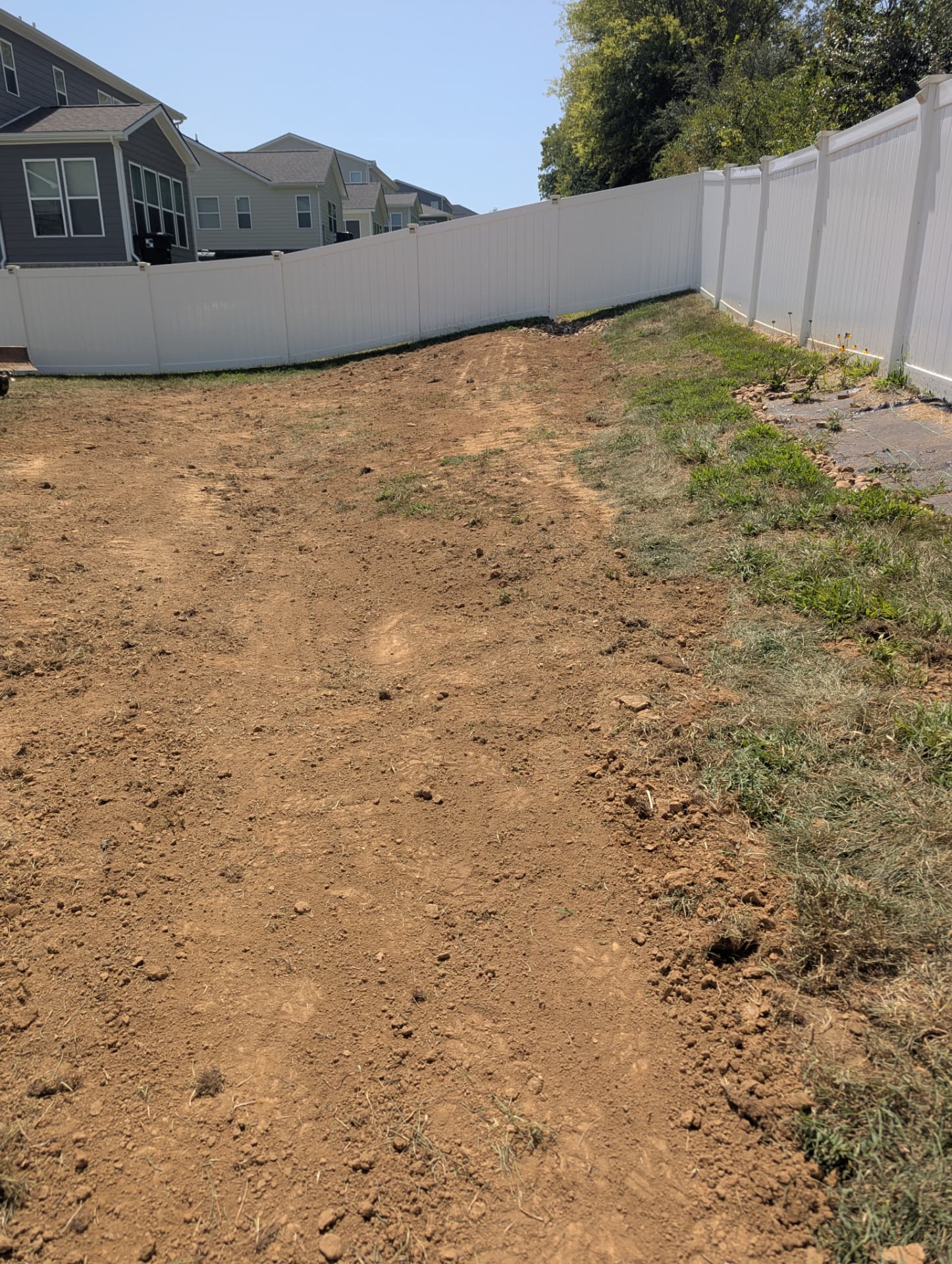
Approximately 42 feet of the main backyard had to be regraded to remove the high area that was holding water. In the problem section, I needed to lower the grade roughly 3 to 4 inches to reconnect the drainage path.
Past that obstruction, the property already had approximately 12 inches of fall over 65 feet. That was plenty of elevation to move the water. The problem wasn't a lack of overall fall. It was the localized high spot interrupting it.
I also reshaped approximately 45 feet of the rear swale, where concentrated runoff and erosion had damaged the original drainage path.
This is an important distinction on drainage work. If the ground has enough elevation to drain naturally, I generally prefer to make the grading work instead of automatically putting another underground system in the yard. Pipe is useful when it solves a specific problem. Grade should still do as much of the work as the property allows.
Building the Two Systems to Work Together
The completed project uses both approaches.
The large volume of neighboring runoff is intercepted near the property line and carried through a dedicated 6-inch underground drainage system. The rest of the backyard was reshaped so normal surface water can continue flowing naturally across the property without stopping behind the old back-pitched section.
That keeps the unusually heavy runoff from having to travel across the lawn while still allowing the yard itself to drain the way it should.
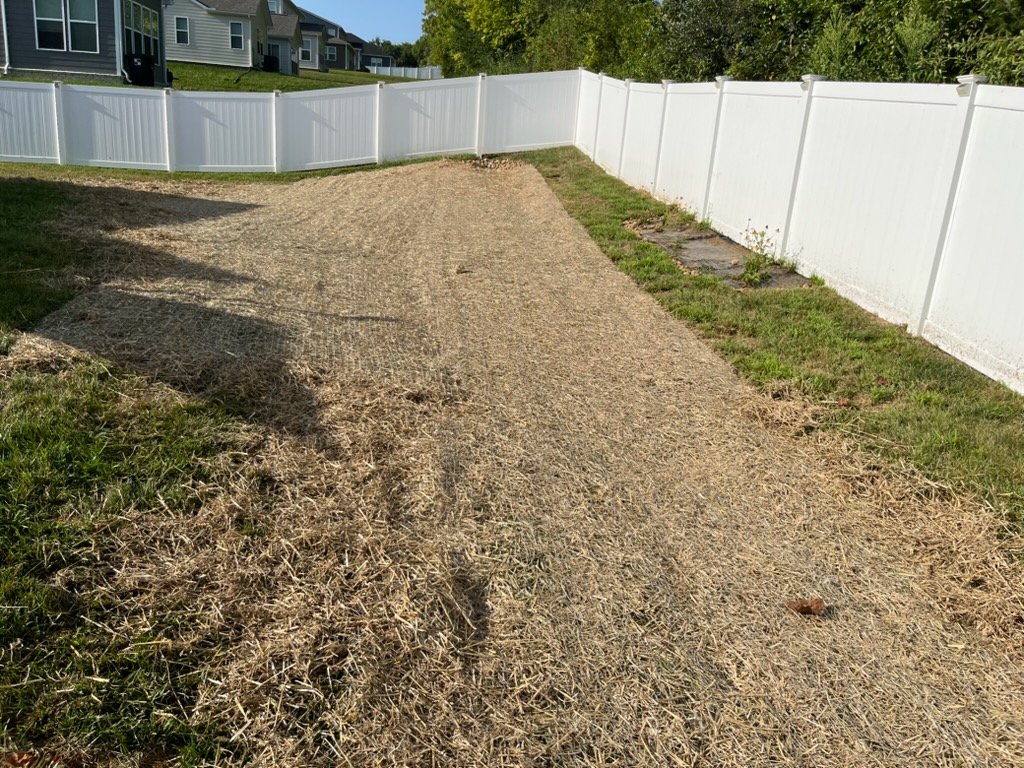
After grading was complete, the disturbed areas were seeded and covered with erosion-control blanket to protect the newly shaped soil while vegetation becomes established.
The Completed Result
The homeowner now has a controlled route for the heavy runoff entering from the neighboring property instead of allowing that water to continue carving through the backyard.
The rear collection area is protected against erosion.
The intercepted water travels through approximately 60 feet of 6-inch drainage pipe and discharges at a protected location on the opposite side of the yard. And the lower portion of the property once again has positive surface drainage after the roughly 3-inch back-pitched area was corrected.
This project is a good example of why I look at the entire water path before deciding what type of drainage system to install. One section needed a catch basin and pipe. Another section needed grading. Trying to solve both problems the same way would have added work without necessarily producing a better drainage system.
Water tells you what the problem is if you take the time to follow where it's coming from, where it stops, and where it has a safe place to go.
Drainage & Grading in Columbia and Maury County
CANDO is a residential drainage and grading contractor working in Columbia and across Maury County. You can see more completed work in the Project Center, including a backyard grading and downspout drainage correction that started with the same question this one did: where is the water actually coming from?
Standing water is usually the symptom. The water path is the real problem.
If runoff, erosion or poor grading is affecting your property, CANDO can evaluate where the water is coming from, where it is going now and what needs to change to give it a better route.
Frequently Asked Questions
Learn more about this type of project in our Frequently Asked Questions.
Visit our Frequently Asked Questions