Diagnose the Problem Before Choosing a Fix
"The source of your water—where it's coming from and where it's ending—is the first place you have to look. Without knowing that, you can't design an effective drainage system."
When standing water collects in your yard or moisture appears in a basement or crawl space, you know there is a problem. The harder question is determining the cause and deciding which solution—such as a French drain, surface drain, foundation drainage, downspout extensions, regrading, or erosion control—is the best fit.
Getting drainage right starts with identifying the true source of the water before choosing a fix. After more than two decades moving dirt, studying water flow, and solving drainage problems, my guiding principle is simple: diagnose the problem first, then build the solution around the property.
Many homeowners try quick fixes, such as adding gravel to a puddle or buying a drainage kit off the shelf. Sometimes those fixes help temporarily, but if the source and path of the water are not understood, the problem often returns.
The first thing to determine is where the water is coming from. Only then can you choose a solution that has a chance of working long term.
Understanding Water Volume: Why Capacity Matters
Many homeowners do not realize how much the volume of water affects the type and size of drainage solution required.
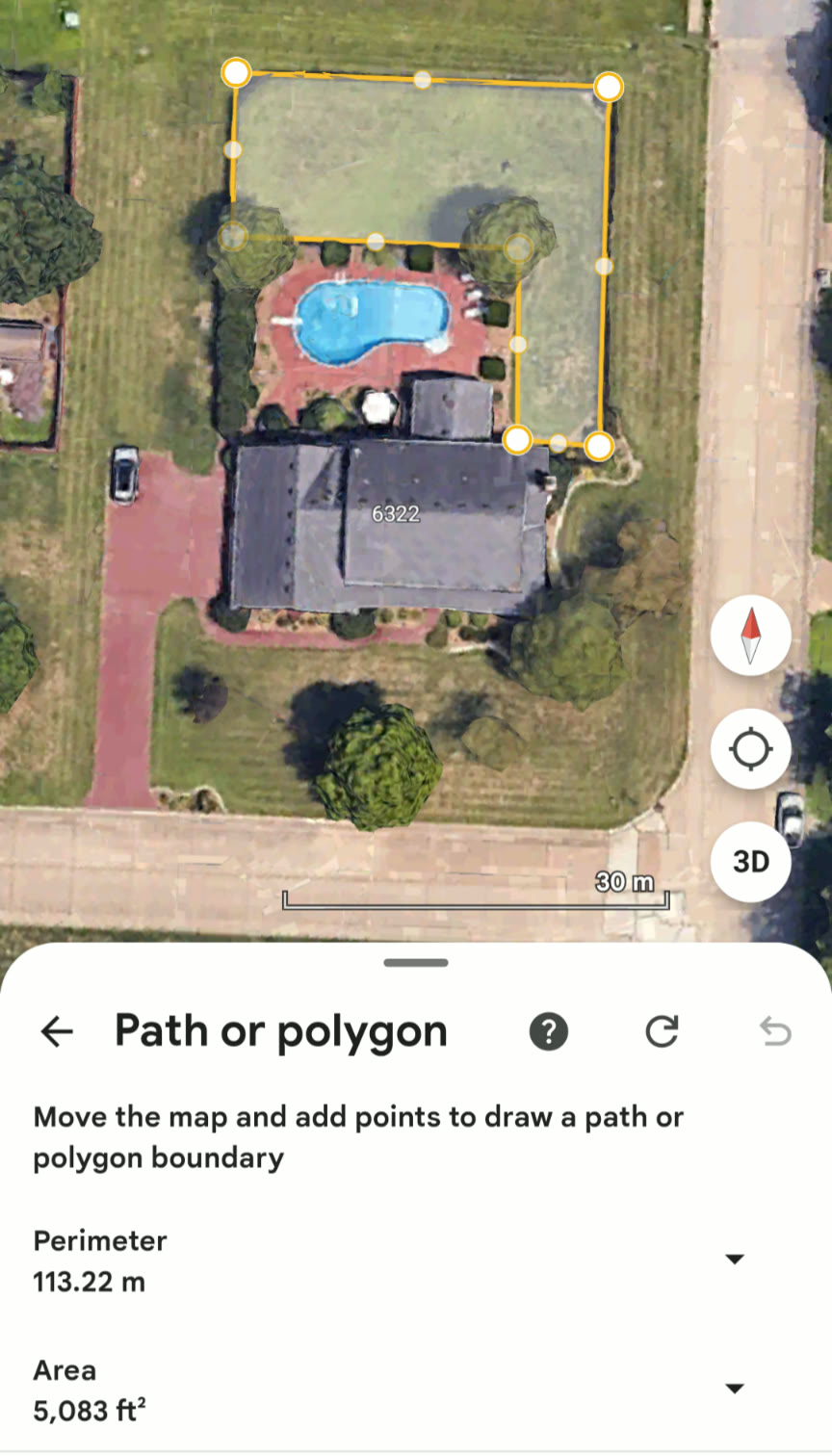
It is not enough to know where a puddle forms. You also need to estimate how much water is reaching that area and how quickly it arrives during a heavy rain. A small amount of slow-moving groundwater is a different problem from concentrated roof runoff or stormwater moving off a large uphill area.
If a French drain, catch basin, swale, or pipe is undersized, it may appear to work during a light rain but become overwhelmed during the storm that matters most.
That is why I evaluate the contributing area, rainfall intensity, runoff path, and available outlet before recommending a system. The goal is to make sure the collection point, pipe size, and discharge area can handle the expected water volume.
"A drainage system can appear to work during a light rain and still fail during the storm it was actually needed for."
A good drainage plan should be designed for the difficult days, not just average conditions.
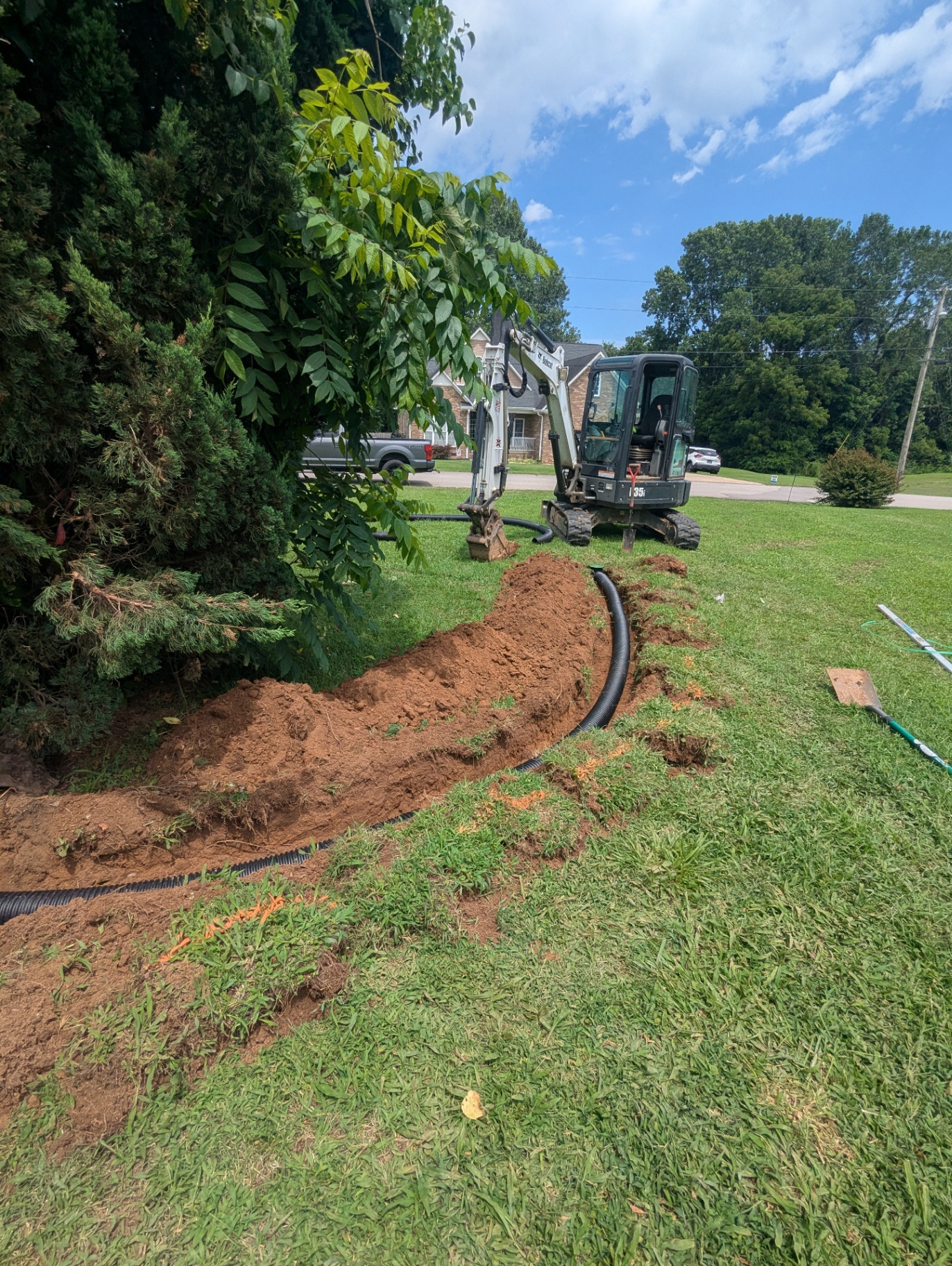
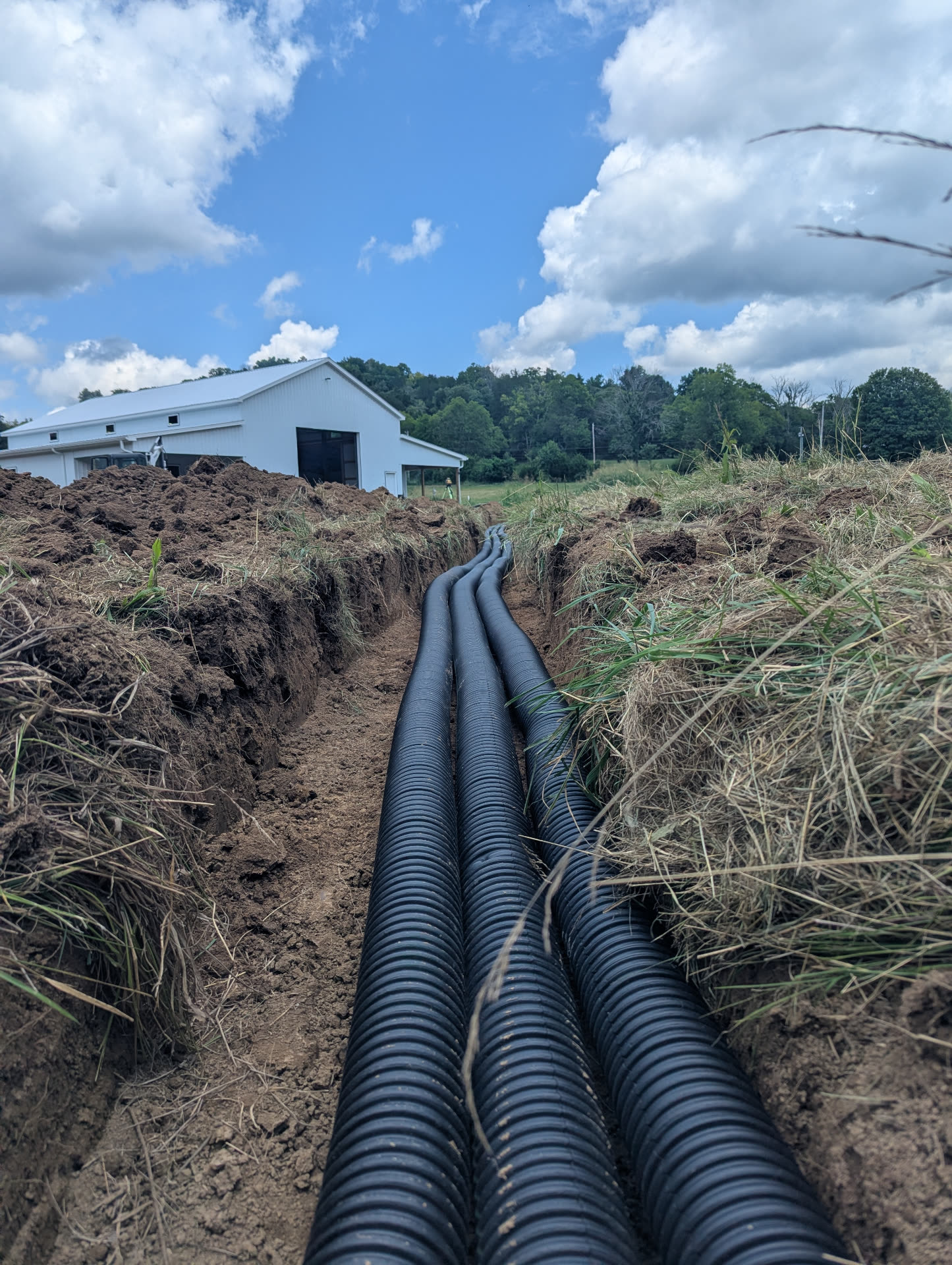
For examples of how different systems are used in the field, visit the CANDO LLC project portfolio.
Tracing Water Paths and Identifying Critical Areas
Once the source and approximate volume are understood, the next step is mapping how water moves across the property.
It is not enough to look only at where the water ends up. You also need to understand its path, speed, and whether it becomes concentrated before reaching the problem area.
That means looking at:
- Rooflines and downspouts
- Driveways and patios
- Natural swales and low areas
- Uphill slopes
- Neighboring runoff
- Utility trenches
- Areas where water narrows into a channel
- Available discharge points
A small change in grade can funnel a surprising amount of water toward a foundation. Water that moves harmlessly as a broad sheet across an open yard can become destructive when a driveway, retaining wall, landscape bed, or building forces it into a tighter path.
The goal is to understand where the water naturally wants to go, then support or redirect that movement in a way that protects the home without creating a new problem elsewhere.
"The puddle is usually where the water finishes its trip. It does not necessarily tell you where the problem began."
Watching the property during or shortly after a heavy rain is often one of the most useful parts of the evaluation. It reveals information that may not be obvious on a dry day.
Matching Drainage Solutions to the Actual Problem
There is no universal answer to which drainage solution is best.
The correct system depends on whether the problem involves surface runoff, subsurface water, roof water, poor grading, erosion, or a combination of several sources.
French Drains Versus Surface Drains
French drains are designed to collect subsurface water moving through saturated soil, as well as surface water that currently sheet-drains across a long plane. They use a gravel-filled trench and perforated pipe to intercept that water and carry it toward an outlet.
Surface drains collect water that is already visible on top of the ground or concentrated in one path or end location that is unsuitable. Catch basins, channel drains, and grated inlets are commonly used where runoff collects quickly in a low area, along a hard surface, or at the bottom of a slope.
A broad soggy area caused by subsurface seepage may benefit from a French drain. A yard low spot receiving fast-moving runoff may need a surface inlet instead.
Sometimes a combination works best. A property may need subsurface collection in one area and a surface inlet where concentrated runoff reaches a low point.
The water source should determine the collection method—not the name of the drainage system a homeowner has heard most often.
Foundation Drainage and Downspout Extensions
Uncontrolled roof runoff is one of the most common and easiest water sources to correct.
When downspouts release water directly beside a foundation, that water can saturate the soil, enter a crawl space, contribute to moisture beneath a slab, and worsen existing grading problems.
Properly installed downspout extensions can often make a major improvement before more expensive drainage work is considered. In many situations, I prefer to carry roof water approximately 10 to 15 feet away from the structure, provided the outlet reaches an area where the water can continue moving safely away.
I have extended gutters as little as five feet and as far as 150 feet. The correct length depends entirely on the property and where the water can safely discharge.
The pipe must maintain a consistent downward slope, and the discharge should avoid emptying into another low spot, onto a walkway, or toward a neighboring property.
Foundation drainage may also be necessary when groundwater or subsurface water is reaching the structure. The important distinction is that downspout extensions control roof runoff, while foundation drainage addresses water moving through the soil around the foundation.
Those are related problems, but they are not the same problem.
Erosion Control and Regrading
Some drainage problems cannot be solved with pipe alone because the shape of the land is the main issue.
Recurring gullies, exposed roots, washed-out slopes, and water moving toward a house often indicate that the property needs to be reshaped or stabilized.
Regrading can create positive drainage away from the home, rebuild a swale, remove a low spot, or reconnect water with a safer natural path. Berms may also be used in certain situations to guide runoff, although they must be built carefully so they do not trap water or push it toward another property.
Erosion control protects the new path after grading. Depending on the slope and water velocity, that may include seed, erosion-control blanket, vegetation, stone, riprap, or another stabilization method.
The goal is not simply to move the water. It is to move it at a manageable speed and release it somewhere that will remain stable.
"You are not finished when the water leaves the problem area. You also have to understand what happens where it is discharged."
Practical Tips for Diagnosing a Drainage Problem
- Identify where the water originates.
- Determine whether it is surface water, subsurface water, roof runoff, or a combination.
- Estimate how much water reaches the problem area during a heavy rain.
- Follow the complete path from the source to the outlet.
- Look for places where water becomes concentrated.
- Confirm that the proposed system has a dependable discharge point.
- Match the collection method to the type of water being addressed.
- Consider how the solution affects neighboring areas and future landscaping.
- Correct simple sources, such as short downspouts or poor surface grading, before installing a more complicated system.
Careful observation beats guesswork.
Look at the water's entire journey:
- Where does it start?
- How does it move?
- Where does it become concentrated?
- Where does it settle?
- And most importantly, where can it be discharged safely?
Skipping those questions often leads to repeated repairs and systems that treat the symptom rather than the cause.
Choosing the Right Solution for Your Property
The quality of a drainage system depends as much on the diagnosis as the installation.
Every property is different. The same system that works well at one home may fail at the next because the elevations, soil, runoff volume, or outlet are different.
Homeowners should ask the contractor to explain:
- Where the water is coming from
- Why the proposed system matches that source
- How the expected water volume was considered
- Where the system will discharge
- What happens during an unusually heavy storm
- Whether grading or erosion control is also required
- How the system can be accessed or maintained later
A good recommendation should be understandable. Homeowners should know why a French drain, surface drain, downspout extension, swale, or regrading plan is being proposed—not simply be told that it is the standard solution.
Next Steps for Homeowners
- Observe the property during or immediately after a heavy rain.
- Photograph or record where the water begins, how it moves, and where it settles.
- Check gutters, downspouts, low areas, slopes, and available outlets.
- Avoid choosing a system before the water source is understood.
- Ask for a clear explanation of how the proposed solution addresses the root cause.
Accurate diagnosis and a site-specific plan help prevent wasted expense and repeat repairs.
Why Tailored Drainage Solutions Matter
Great drainage is not accidental.
It comes from understanding the water source, the volume, the path, and the available outlet before excavation begins.
Whether the problem is standing water, a wet crawl space, foundation moisture, or eroding soil, the solution should be designed for that property—not copied from the last job or selected from a generic kit.
The right system may be simple. It may be a downspout extension or a small grading correction. It may also require a combination of surface drainage, subsurface collection, erosion control, and regrading.
What matters is that every part of the system has a clear purpose and works together.
For real-world examples of drainage and grading solutions, visit the CANDO LLC project portfolio.