

Drainage Specialists · Middle TN
Standing Water?
We Solve It.
French drains, surface drains, downspout extensions, and proper regrading — built to last and protect your foundation.
- Free Estimates
- Licensed & Insured
- Locally Owned
Sound Familiar?
We Fix These Every Day.
- Soggy yard that won't dry out
- Water pooling against your foundation
- Erosion washing out your landscaping
- Wet crawl space or basement
- Downspouts dumping next to the house
- Driveway flooding every storm
Recent Work
Real Results On Real Properties.
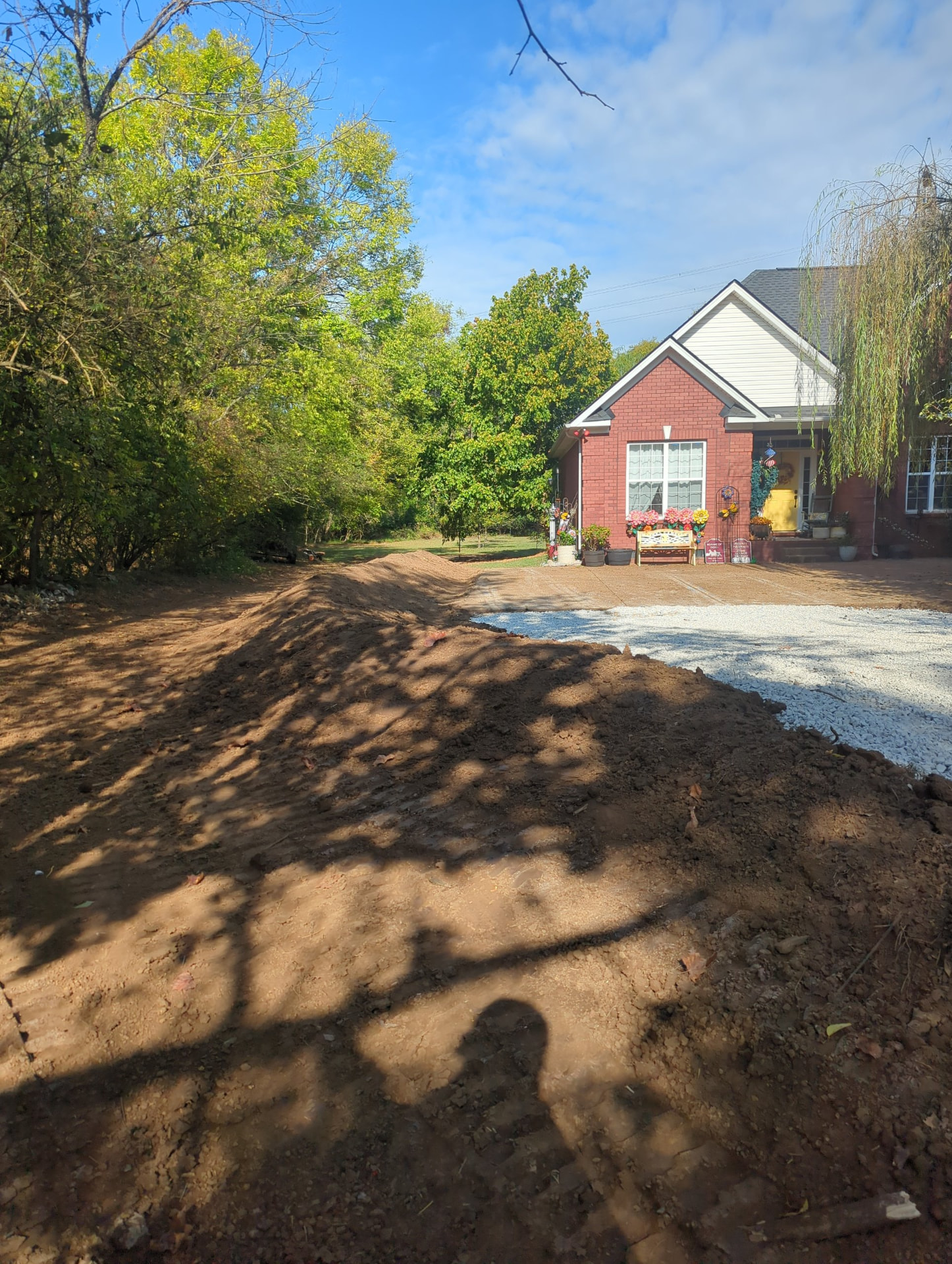
Stormwater Diversion & Raised Driveway Berm — Spring Hill, TN
Upstream stormwater redirected with a raised driveway crossing, approximately 150 feet of protective berm, and precise interior grading.
View Project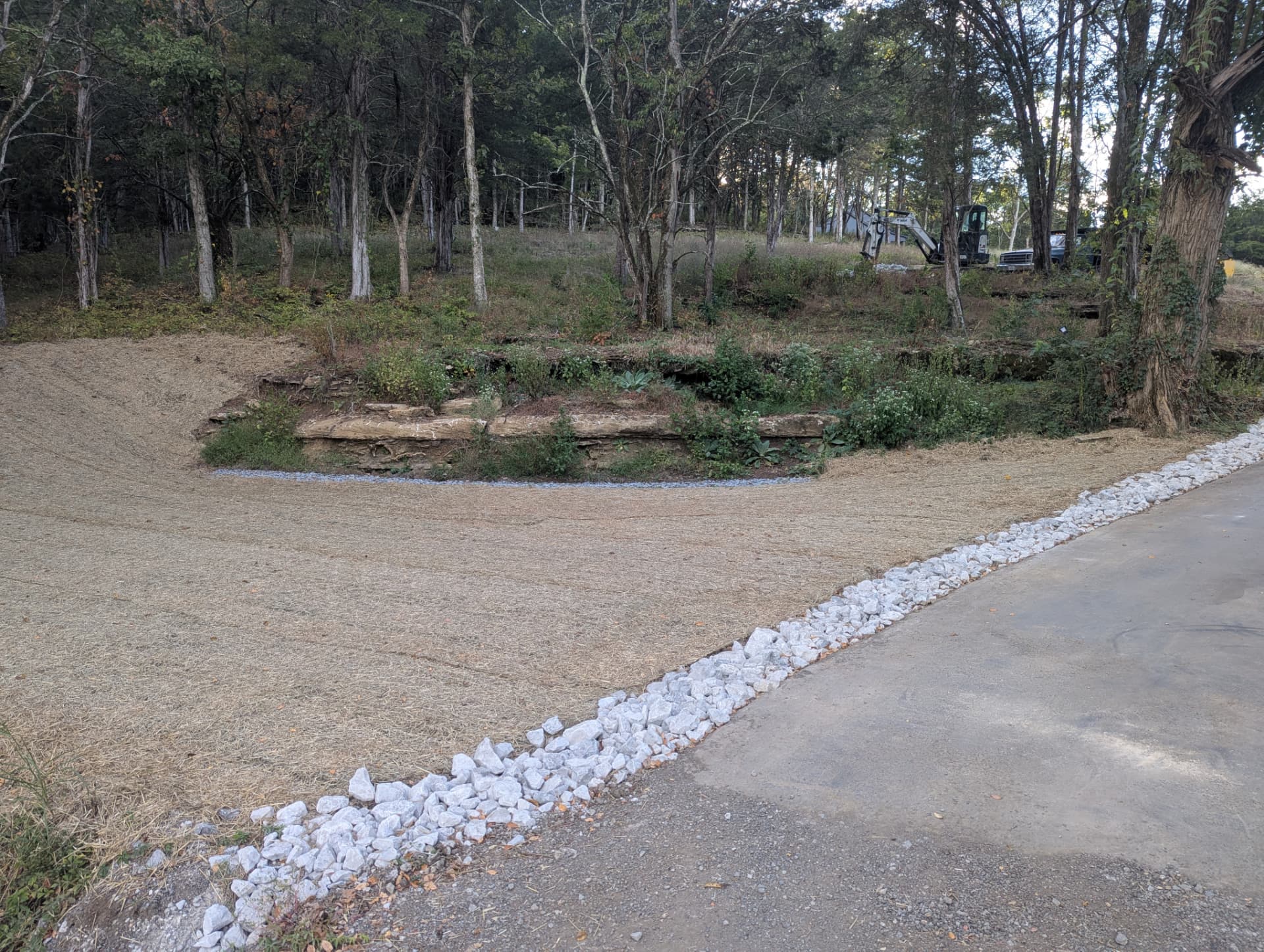
Drainage, Grading & Hillside Water Management — Columbia, TN
Hillside seepage and rock-face runoff routed with French drains, cleaner riprap drainage, finish grading, and erosion-control blanket.
View Project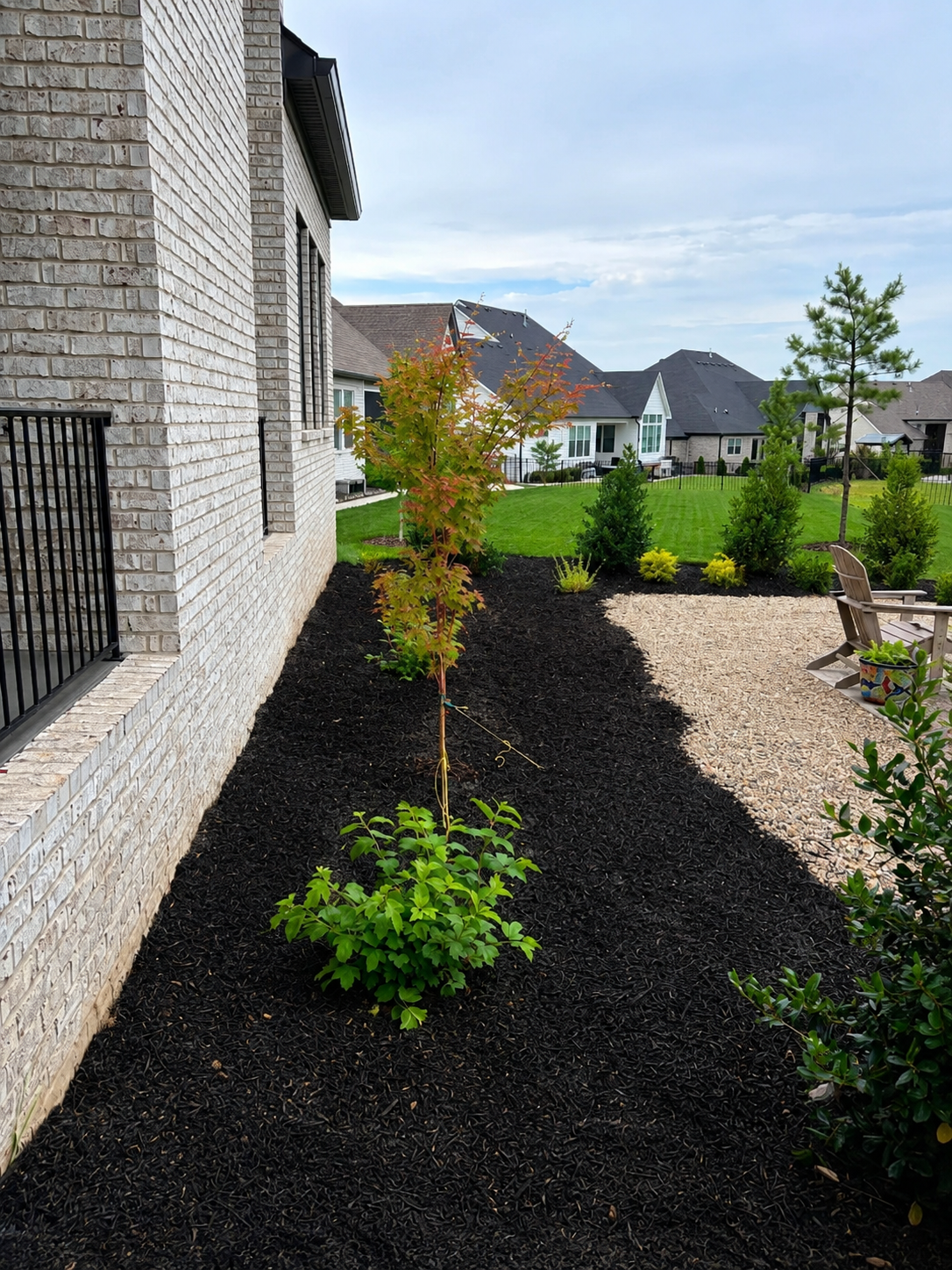
Franklin TN Drainage & Grading Project
Standing water solved with downspout extensions, regrading, and targeted French drains.
View ProjectWhat We Do
Done Right The First Time.
French Drains
Subsurface drains that move groundwater away before it causes damage.
Surface Drains
Catch basins and channel drains for hardscapes and low spots.
Foundation Drainage
Help keep water away from the foundation with proper grading, downspout drainage, and surface-water routing. Perimeter drains only when necessary.
Downspout Extensions
Get roof runoff out and away — buried, sloped, and built to last.
Erosion Control
Swales, rip-rap, and replanting to stabilize slopes and stop wash-outs.
Regrading
Re-slope your yard so water flows away from your home, not toward it.
Our Process
Simple. Honest. Thorough.
- 1
Free On-Site Visit
We walk the property, listen to your concerns, and figure out where the water is really coming from.
- 2
Honest Plan & Quote
A clear written quote — no pressure, no surprises. We'll explain exactly what we'd do and why.
- 3
Clean, Careful Install
Modern equipment, tidy work, full clean-up. We treat your yard like our own.
Ready for a real drainage fix?
Why Cando
Neighbors Who Show Up.
- Family-owned and operated in Middle Tennessee
- Free, no-pressure on-site quotes
- Modern equipment — clean, careful work
- Clear communication from quote to clean-up
FAQ
Common Questions.
+How much does a French drain cost?
Most residential French drain projects in Middle Tennessee run between $1,500 and $6,500 depending on length, depth, and discharge point. Every quote is free and written down so you know exactly what you're paying for.
+What is the best drainage solution for a yard with standing water?
It depends on where the water is coming from. Subsurface water usually calls for a French drain. Surface water from heavy rain often needs catch basins, regrading, or a swale. We start every job with a drainage evaluation so we recommend the right system, not just the easiest one.
+How do I know if water is damaging my foundation?
Common signs include cracks in basement walls, efflorescence (white powder) on block, musty crawl space odors, and pooling within ten feet of the house after a storm. If you see any of these in Columbia, Spring Hill, Franklin, or anywhere in Maury or Williamson County, schedule a drainage evaluation before the problem grows.
+Do you offer free estimates?
Yes — every drainage evaluation is free and includes a walk-around with you to identify the actual source of the water before we ever propose a fix.
+How long does a typical job take?
Most residential drainage projects are completed in 1–3 days. Larger regrading or multi-system jobs may take longer; we'll give you an honest timeline up front.
+Are you licensed and insured?
Yes. CANDO LLC is fully licensed and insured in the state of Tennessee.
+What areas do you serve?
Columbia, Spring Hill, Franklin, Thompson's Station, Chapel Hill, Lewisburg, Santa Fe, and the surrounding Maury and Williamson County areas.
Still have questions?
Visit our Frequently Asked Questions page.
Drainage Contractor Serving Middle Tennessee Homeowners
Most of the calls I get start the same way: a soggy yard that never dries out, water creeping toward the foundation, a downspout dumping right beside the house, or a crawlspace that smells damp after every storm. The homeowner has usually already tried something — a splash block, a bag of gravel, a short piece of black corrugated pipe — and the water still comes back. With more than 20 years of excavation experience behind me, I've learned that drainage problems almost never fix themselves and rarely get better without understanding where the water is actually coming from.
What I Look For First
Before I recommend anything, I follow the water. I want to see where it starts, where it wants to go, and what's stopping it from getting there. When I walk a property I'm watching for a few specific things: the slope of the yard against the foundation, how the gutters and downspouts terminate, whether the soil is holding water or shedding it, and whether there's a low spot collecting runoff from a neighboring lot. I also look uphill — a lot of standing water in a Franklin or Spring Hill backyard is coming from somewhere the homeowner never thought to check.
I try to see the property during or right after a rain when I can. A dry-day walkthrough tells me what the grade is doing; a wet-day walkthrough tells me what the water is actually doing. Those aren't always the same story.
Why The Problem Is Happening
In my experience, most residential drainage problems in this area come down to three causes: surface water that has nowhere to go, subsurface groundwater saturating soils faster than they can drain, or roof runoff being dumped in the wrong spot. Our clay-heavy soils don't forgive standing water — once the ground is saturated, it stays saturated for a long time, and any water that keeps arriving has to go somewhere. If the grade around the house is flat or negative, that somewhere is your foundation.
Water is patient. It will find the smallest gap, the lowest point, or the least compacted backfill and work its way in. That's why I always say water should move around a house, not through it — and the way you make that happen is to give it a clear, gravity-fed path off the property before it gets a chance to pond.
Mistakes I Commonly See
The biggest one is treating a drainage problem like a pipe problem. Someone runs a French drain across the low spot without thinking about where the water is coming from or where it's going to exit, and two years later it's silted up and useless. Another common one is burying corrugated black pipe with no fabric, no bedding, and no outfall — it works for a season, then the corrugations trap sediment and it becomes a slow underground swamp. I've also pulled up plenty of downspout extensions that dead-end six feet from the house because someone ran out of pipe. That water was going straight back into the foundation.
The other mistake I've noticed is skipping the grading step. Grading and drainage work together — you can't pipe your way out of a yard that slopes toward the house. If the grade is wrong, no drainage system will keep up with a heavy Tennessee storm.
How I Usually Solve It
Once I understand the source, I pick the simplest solution that will hold up long term. Sometimes that's extending downspouts and correcting a negative slope. Sometimes it's a swale that moves surface water around the house before it becomes a problem. Sometimes it's a properly built French drain with clean stone, filter fabric, and a gravity outfall to daylight. And sometimes the honest answer is that grading alone will solve 80% of what the homeowner is dealing with — see our grading solutions page for how I think about that. Pipes are tools, not the answer to every problem.
Standing Water and Yard Drainage
Standing water is more than a nuisance. It kills grass, breeds mosquitoes, undermines walkways, and slowly migrates toward the lowest point on the property — which is usually the house. The right fix depends on whether you're dealing with subsurface groundwater, surface runoff, or both. I don't guess. I diagnose before I dig.
French Drains
A properly built French drain — sloped trench, perforated pipe, clean stone, filter fabric to keep silt out, and a real gravity outfall — is one of the most reliable subsurface fixes for our soils. Built right, it can quietly work for decades. Built wrong, it fails in a season.
Catch Basins and Surface Drains
For hardscapes, low spots, and heavy downspout flow, catch basins capture water at the surface and route it through solid pipe. I size these for our heavy summer storms, not for a calm afternoon — that's when they need to actually work.
Downspout Drainage
One downspout can dump hundreds of gallons against a foundation in a single storm. I bury the extensions, tie them into solid pipe, and daylight the water well away from the house. It's one of the highest-value drainage upgrades a homeowner can make.
Swales and Surface Grading
Sometimes the best answer isn't a pipe at all — it's a properly shaped swale that uses gravity to move water across the property before it ever becomes a problem. I like solutions that require less maintenance, and a well-cut swale is about as low-maintenance as drainage gets. Learn more on our grading solutions page.
Foundation Drainage and Crawlspace Moisture
The foundation is the most expensive part of the house, so it deserves the most careful drainage. I look at perimeter slope, downspout termination, any window wells or low entries, and — if there's a crawlspace — what humidity and standing water look like underneath. If I see efflorescence (that white powder on block), musty smells, or seepage stains, we're already past "hope it doesn't get worse." A real water management plan is almost always cheaper than the foundation repair it prevents.
My first move is always external surface-water management: positive grading away from the house, buried downspout extensions that daylight well clear of the walls, and swales or surface drains where runoff needs somewhere to go. That handles most of the foundation moisture I see. An excavated perimeter drain is something I'd only consider in unusual cases, after those simpler remedies have been assessed — a last resort, not the default. I don't do interior or basement waterproofing; the work stays outside, where the water starts.
What You Can Check Yourself
Not everything needs a contractor. Walk your property during the next hard rain — the wet walk tells you more than any dry-day inspection. Look for downspouts dumping within a few feet of the foundation, mulch beds sloped back toward the house, splash marks on siding, and any point where water is running as a stream instead of sheeting off. If you can extend a downspout six or eight feet with a temporary line and it noticeably helps, that's a strong hint about where the permanent fix belongs. Keep gutters clean, keep mulch below siding, and don't let landscaping build up higher than the original grade against the house. Those three habits alone will prevent a lot of the problems I get called out for.
When To Call Me
If water keeps coming back after every storm, if you see it against the foundation, if the crawlspace is damp, or if the same soggy spot has ignored your last three attempts to fix it, that's the point to have someone walk it with you. I'll come out, follow the water, and give you an honest opinion — even if the honest opinion is "you don't need what you think you need." Related services include erosion control, grading, and driveway drainage.
Request a Drainage Evaluation
If standing water, foundation moisture, or poor yard drainage is wearing on you, let's get eyes on it. Call 931-442-5060 or request a free on-site drainage evaluation. I'll walk the property with you, explain what's actually happening, and lay out a clear plan for fixing it for good.
Recent Drainage Project
See a recent Franklin TN drainage and grading project where we solved standing water around a Starnes Creek home using a downspout extension, regrading, and targeted French drains.
Or take a look at a recent Williamson County backyard grading and downspout drainage project where we corrected negative grading, replaced clogged buried downspouts, and installed a yard drain to help stop basement flooding.
Or see how we diverted upstream stormwater at a Spring Hill TN stormwater diversion project with a raised driveway crossing, approximately 150 feet of protective berm, and interior grading away from the home.
Keep Exploring
Related Services
Keep Learning
Service Areas
Serving Homeowners Across Middle Tennessee
Also serving Thompson's Station, Chapel Hill, Lewisburg, and Santa Fe.
Learn Before You Dig
Why Soil Conditions Matter
The ground beneath a wet yard is half the story. Learn how Middle Tennessee clay, aggregates, and elevation dictate the drainage solution that will actually work.