Start With the Water Coming Off the Roof
One of the simplest and most affordable things a homeowner can do to improve drainage around a house, barn, garage, or carport is extend the downspouts.
A roof collects a large amount of water during every storm. If the downspout releases that water only a few feet from the structure, it can soak the soil beside the foundation, enter a crawl space, contribute to moisture beneath a slab, and create erosion around the home.
Getting roof water 10 to 15 feet away from the structure can solve more of the problem than many homeowners realize.
Crawl-space encapsulation and other moisture-control systems can be valuable, but it still makes sense to control the water outside before paying to manage it after it enters beneath the home.
The basic goal is simple:
Carry the water away and give it somewhere safe to escape.
Proper Slope Is Critical
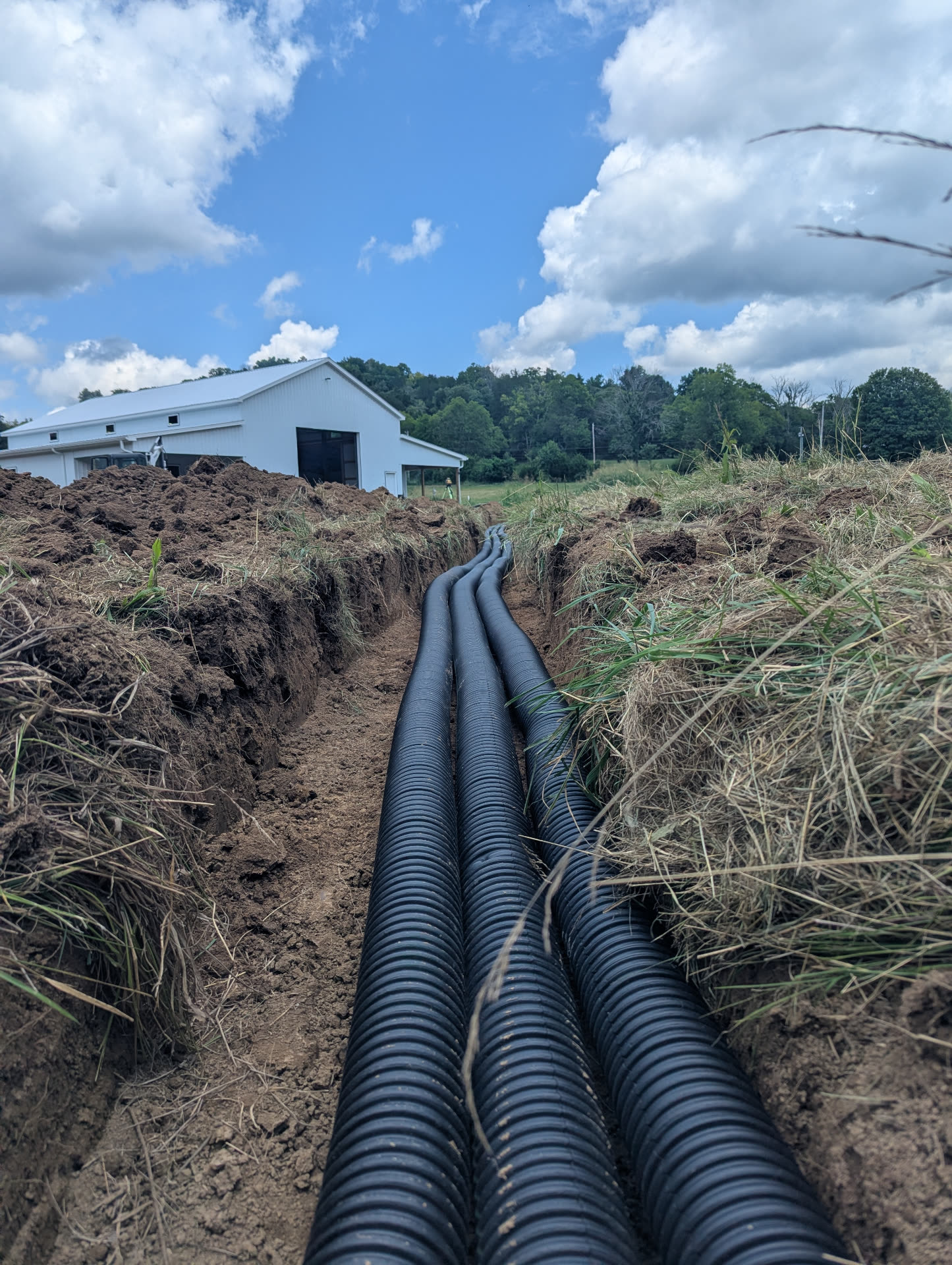
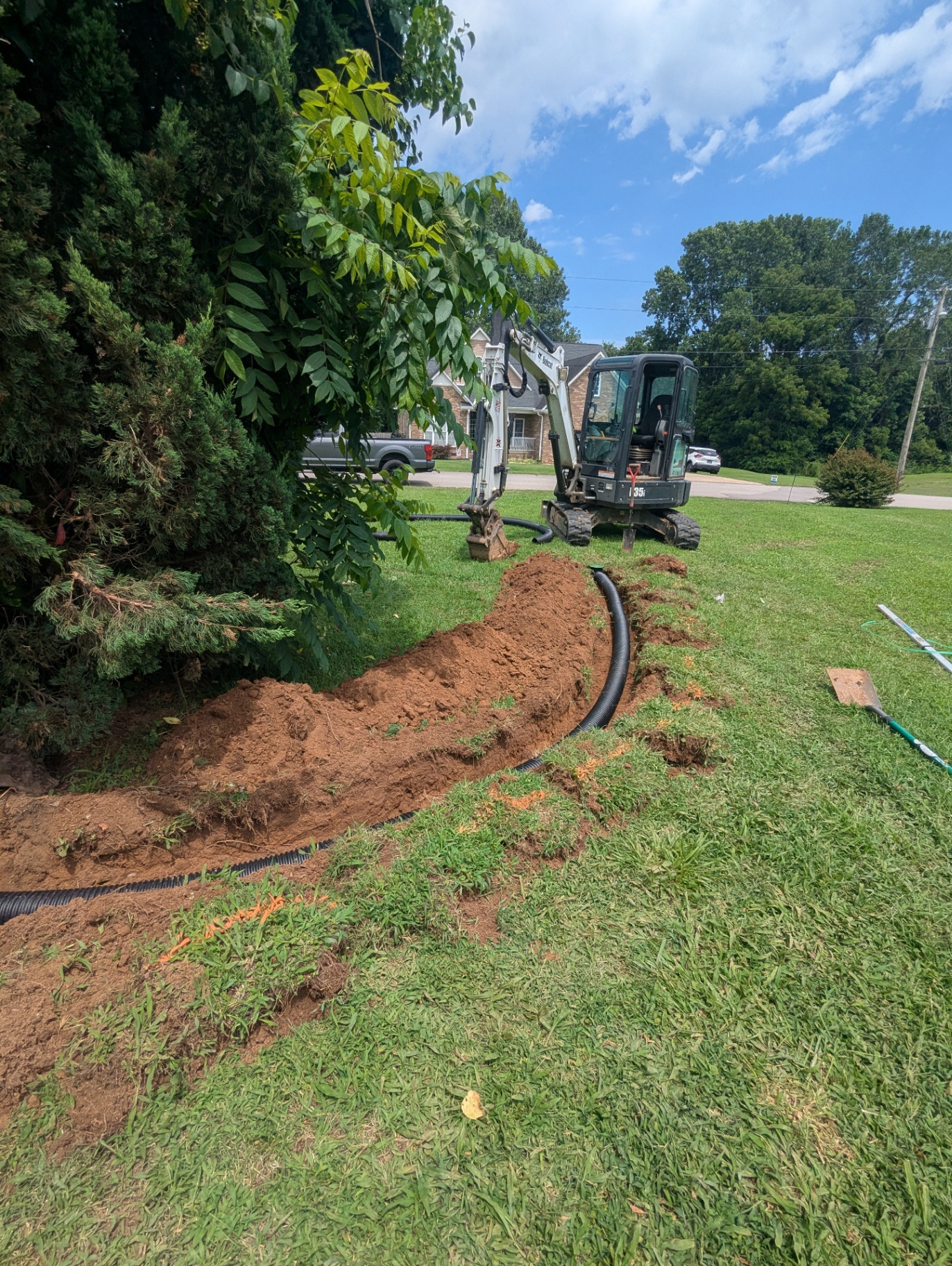
A buried downspout extension needs a consistent downward slope from the house to its outlet.
As a general minimum, I want approximately a 1% slope whenever the property allows it. That means the pipe drops about one inch for every eight feet of travel.
The pipe should continue falling until it reaches the final fitting, popup emitter, or daylight outlet.
One of the most common installation mistakes is creating a belly in the pipe. This happens when part of the extension is installed lower than the surrounding sections.
That low area constantly holds water. Over time, roof debris, shingle grit, leaves, and sediment can settle inside it and turn into sludge. As the buildup increases, the pipe loses capacity and becomes more likely to clog during heavy rain.
Daylight Is Best When the Property Allows It
The best outlet for any gravity drainage system is usually a true daylight discharge.
That means the pipe exits openly at a lower elevation, allowing water and small debris to flow completely out of the system.
Not every property has enough slope for that.
When daylight is not practical, a popup emitter is often a good option. During heavier rainfall, water pressure lifts the lid and allows the system to discharge onto the surface.
The area beyond the emitter must still slope away. Installing an emitter in a low spot where water cannot escape only moves the problem from one location to another.
Every property is different. Some extensions may only need to travel 10 feet. Others must go considerably farther before reaching a safe discharge point.
The distance matters less than the outcome:
Water must be able to leave the structure and continue moving away from it.
Keep Debris Out of the System
Several types of adapters can connect a gutter downspout to a four-inch drainage pipe.
Some include a screen or leaf guard at the downspout connection. The idea makes sense, but a single broad leaf can cover the screen and prevent water from entering the pipe.
I generally prefer a standard open adapter that allows smaller roof debris to travel through the pipe and exit at the outlet or popup emitter.
The better long-term solution is keeping leaves out of the gutter itself with a properly maintained gutter-protection system.
Even with gutter guards, homeowners should still inspect the gutters and outlets periodically. No system remains maintenance-free forever.
A Small Drainage Improvement With a Large Benefit
Downspout extensions are not the answer to every drainage problem.
They will not correct groundwater, an improperly graded yard, hillside runoff, or water entering from another property.
When roof runoff is only part of the picture, work through how to determine the right drainage solution for your property and grading your site for long-term drainage before adding more pipe.
However, roof runoff is one of the easiest water sources to identify and control.
Before installing an expensive drainage system around a home, it makes sense to check the basics:
- Are the gutters functioning?
- Are the downspouts connected?
- Does the pipe maintain a consistent downward slope?
- Is the water carried far enough away?
- Can it escape safely after reaching the outlet?
Sometimes the simplest improvement makes the largest difference.
The long-term benefit is not complicated.
A dry home. That is all we really want.