
CANDO Project Center · Columbia, Tennessee
New-Home Drainage Grading and Driveway Improvement in Columbia, TN
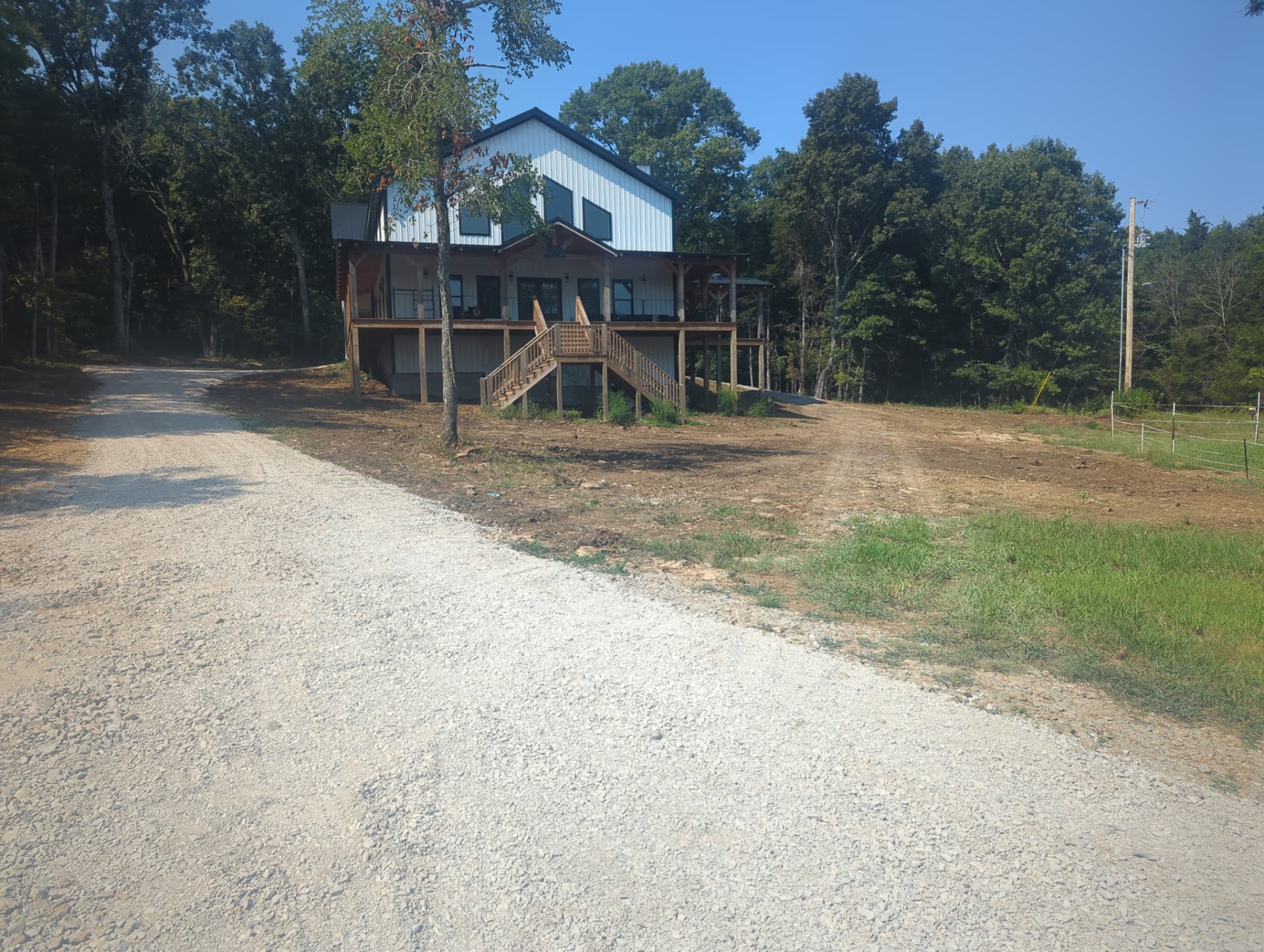
A new home can be positioned correctly on a property and still end up with drainage problems if the final grading around it isn't right. That was the situation on this new barndominium property in Columbia, Tennessee — back-pitched grade around the structure, a future greenhouse sitting in a runoff path, and a driveway that needed a better surface.
- Location
- Columbia, TN
- County
- Maury County
- Project Type
- New-Construction Grading, Drainage & Driveway Improvement
- Primary Issue
- Unfinished grade around a new barndominium, with several areas pitched back toward the structure
- Solution
- Subgrade regrading with onsite soil, a raised and rerouted future greenhouse area, improved rear garage access, and crusher run spread over the driveway
- Duration
- One day of excavation and grading
The home itself had been placed well for the natural lay of the land. The foundation wasn't the problem. The unfinished grade around it was.
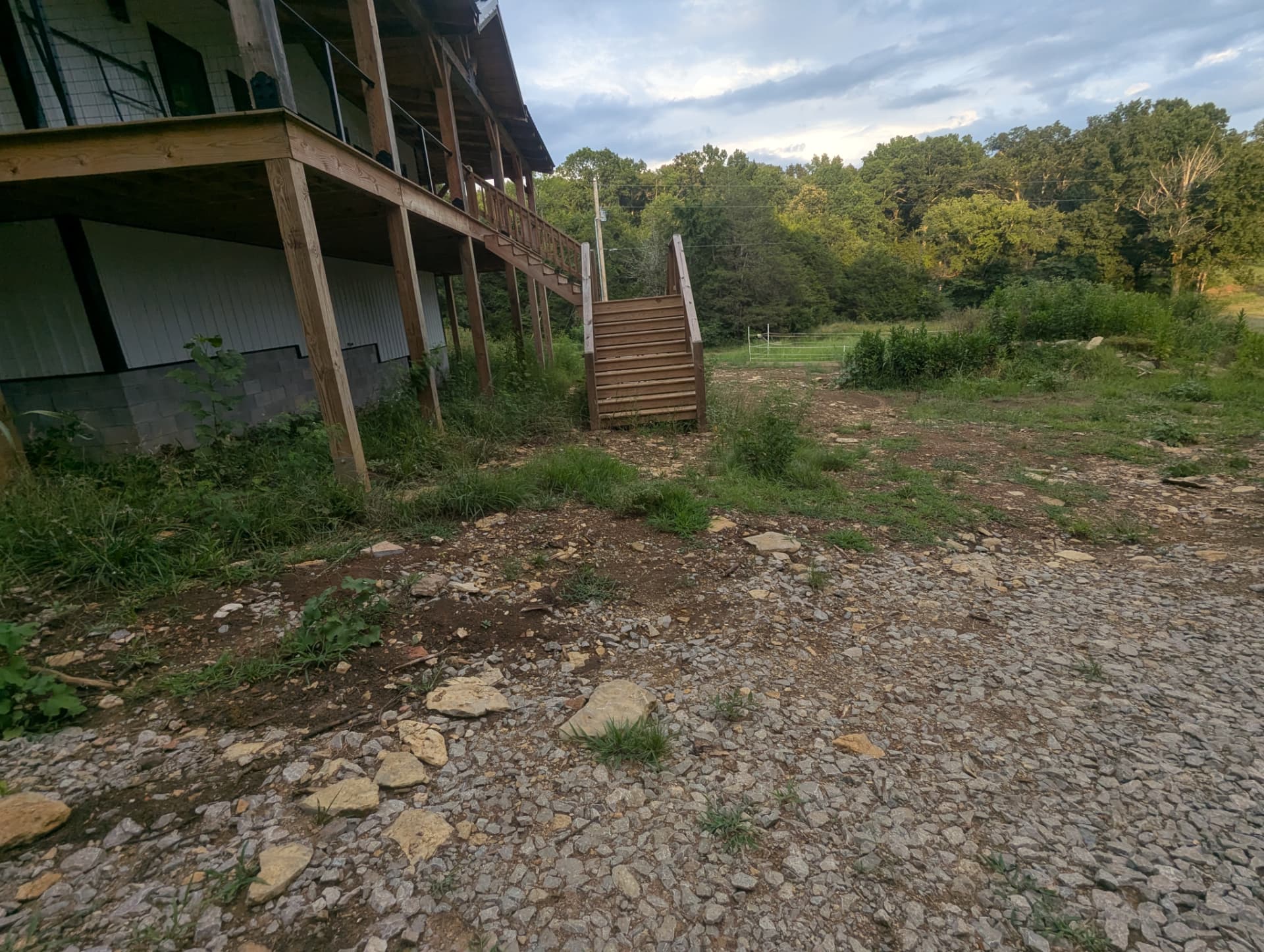
Several areas were back-pitched toward the structure, and runoff was being directed toward the house instead of away from it. The property also needed a usable driveway, additional access behind the garage, and grading around an area planned for a future greenhouse.
The homeowner wasn't looking for finished landscaping. She wanted the property brought to a proper functional subgrade so she could handle the topsoil and final surface work herself later. That changed how we approached the entire project.
Start With Where the Water Needs to Go
Before worrying about whether the dirt looked finished, the first priority was establishing the right elevations around the house. Water doesn't care how smooth a yard looks. It follows grade.
The existing conditions had areas directing water back toward the structure, so we reshaped the surrounding subgrade to establish positive drainage away from the home. Rather than trying to flatten the property, the goal was to work with the natural terrain and give runoff a predictable path. That became especially important behind the house.
Planning Drainage Around a Future Greenhouse
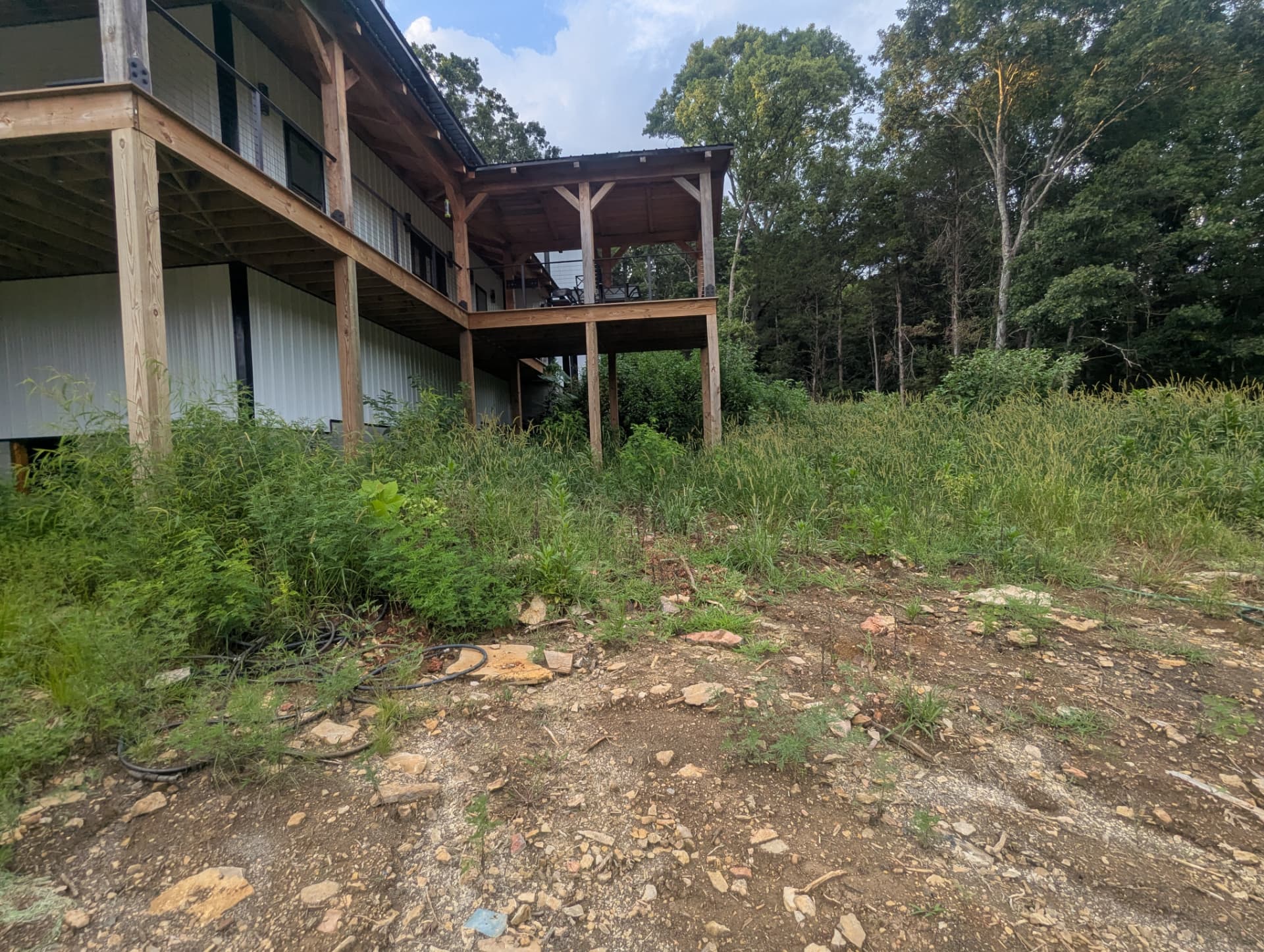
The homeowner plans to install a greenhouse near the covered patio area. It is a good location for the greenhouse, but there was one major problem with the existing terrain: the natural runoff path traveled directly through the future greenhouse area.
Building the greenhouse first and dealing with the water later would have created a much harder problem. Instead, we corrected the grade while the property was still being developed.
Using available onsite material, we raised portions of the greenhouse area approximately 18 inches and established a drainage path around the proposed greenhouse location. That allows runoff to continue moving through the property without directing it through the future structure or back toward the house.
This is why drainage planning matters before landscaping, patios, sheds, greenhouses, and other improvements are installed. It is much easier to give water a place to go before something is built in its way — the same thinking behind grading your site for long-term drainage and access.
Making the Existing Dirt Work
Another challenge on this project was material. There wasn't an unlimited amount of good fill available onsite, and the homeowner did not want to import additional dirt. There was, however, a substantial existing pile of soil and rock roughly 200 feet from where much of the material was needed.
Instead of treating every part of the property equally, we prioritized where that dirt would provide the most value. The order was simple:
- Establish drainage around the new home.
- Correct the future greenhouse area.
- Create usable access behind the garage.
- Use the remaining material for general subgrade shaping.
That meant some lower-priority areas did not receive as much fill as they could have with imported material. That was intentional. When material is limited, the right approach isn't to spread it evenly just so everything looks the same. It is to use it where elevation matters most. Knowing what onsite material will and will not do is a big part of this work — I wrote about that in soil and aggregates before any excavation project.
Creating Rear Garage Access
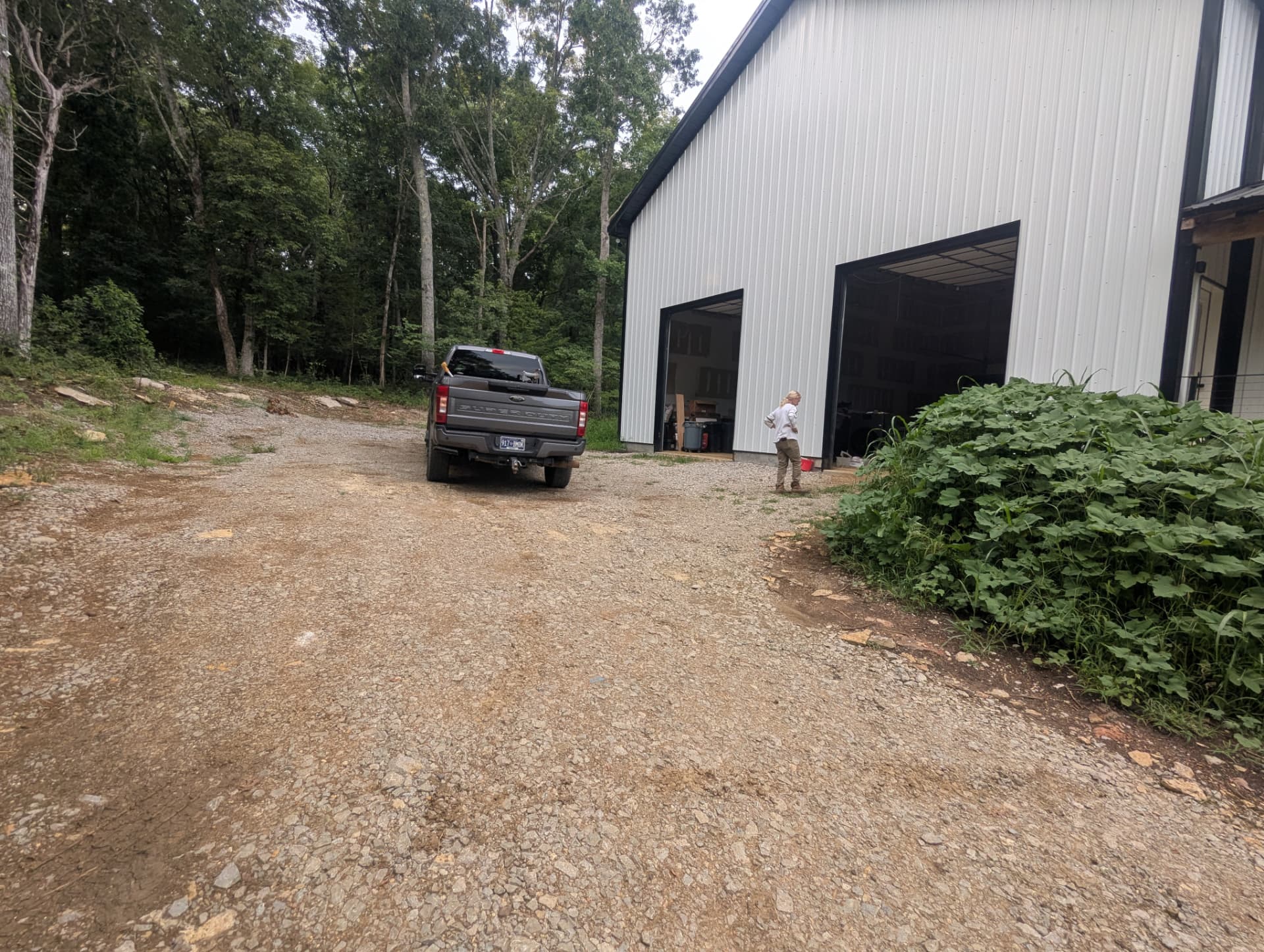
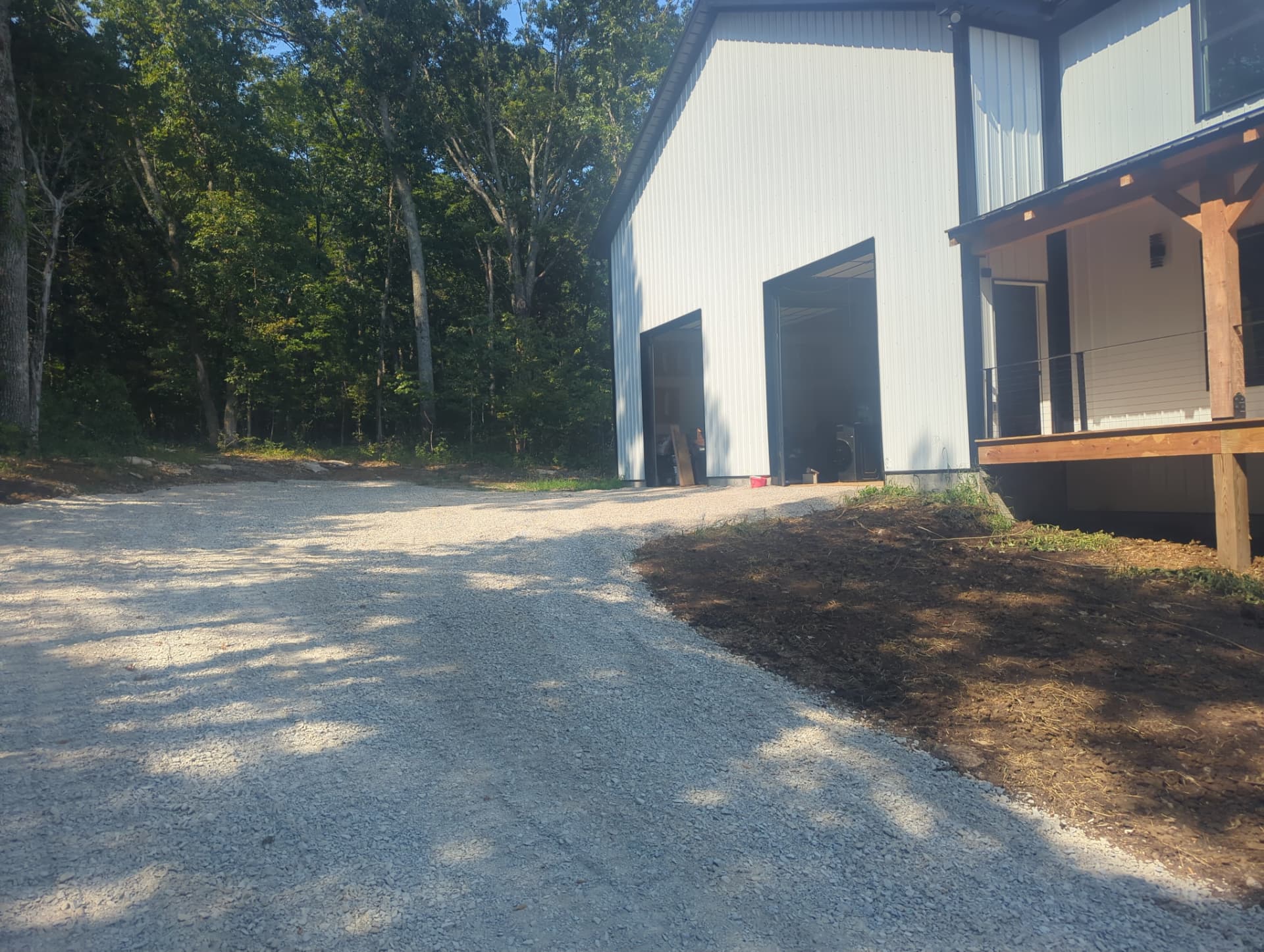
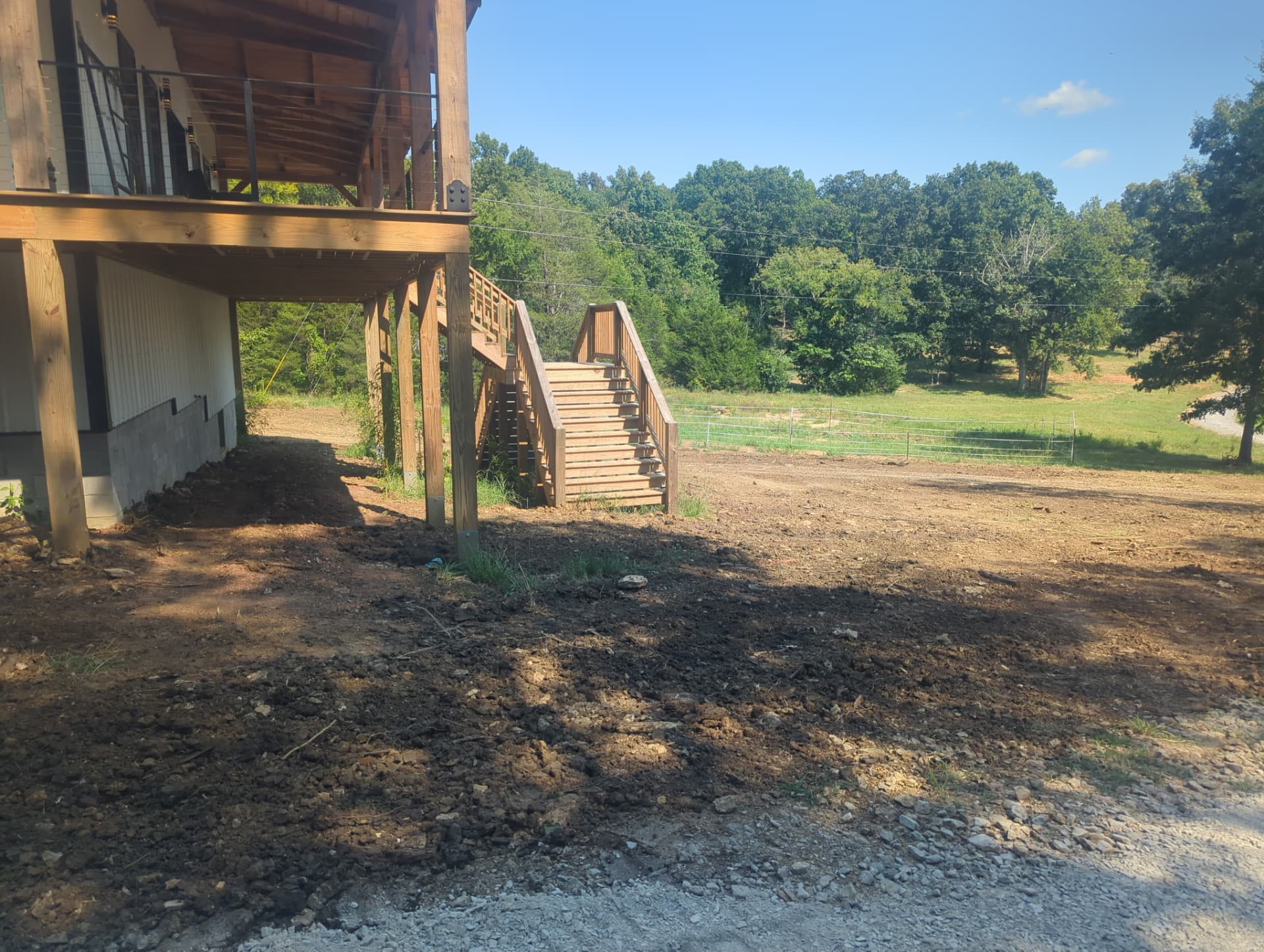
The garage portion of the barndominium allows vehicles and equipment to pass through the building, with doors on both the front and rear. At the back doors, the existing ground was approximately a foot below the garage elevation.
We relocated onsite fill to this area and built the grade up enough to create approximately 30 feet of usable access behind the garage. Because this area was less critical than drainage around the home and future greenhouse, it was handled after those elevations were established. This allowed us to make the best use of the material that was already on the property without bringing in additional dirt.
Improving the Driveway With Crusher Run
The existing driveway had a reasonable underlying base, but the surface material wasn't what we wanted for the final driving surface. Because the homeowner was supplying the stone herself, we recommended that she bring in crusher run.
Crusher run contains a mixture of stone sizes and fines that can be shaped and compacted into a much tighter driving surface than loose, uniformly sized stone. Approximately 60 tons of crusher run were supplied for the project.
We spread and shaped the material from the entrance toward the garage, improving both the driveway surface and the transition into the garage doors. There was enough material remaining to use additional crusher run behind the garage as well, improving the newly established rear access.
Why the Finished Photos Don't Show a Finished Lawn
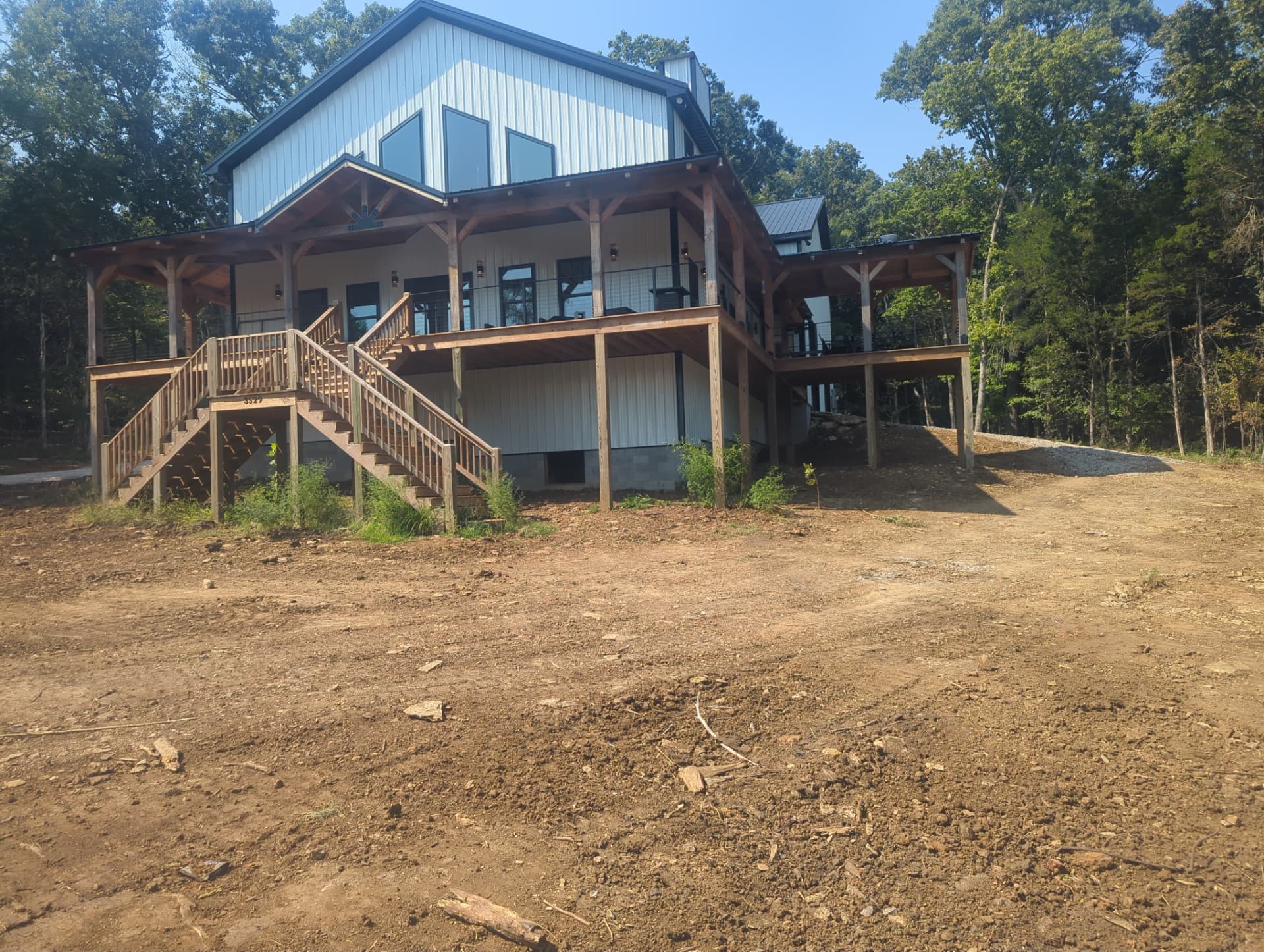
Looking at the completed photos, someone might reasonably ask: "Is the grading actually finished?"
Yes — for the scope of this project. This was intentionally a subgrade-only job. The homeowner chose not to import topsoil as part of our work. She plans to bring in and finish the topsoil herself.
Our responsibility was to establish what matters underneath that finish:
- Proper elevations
- Positive drainage away from the house
- A usable drainage route around the future greenhouse
- Functional garage access
- A properly shaped driveway
- A solid base for whatever landscaping comes next
Topsoil, seed, and landscaping can change how a property looks. They should not be relied on to fix bad elevations underneath. Getting the subgrade right first gives the homeowner a much better starting point for everything that follows.
The Final Result
By the end of the project, the property had a completely different functional layout. The unfinished grade directing water toward the home had been corrected. The future greenhouse was no longer sitting directly in the existing runoff path. Onsite soil and rock had been relocated and strategically reused rather than unnecessarily importing more material. Rear garage access had been established. The main driveway had been improved with approximately 60 tons of crusher run.
And most importantly, the property now had a subgrade designed around how water actually moves across the land. The final surface will continue to change as the homeowner adds topsoil and completes the landscaping, but the elevations underneath are now doing their job.
New build, and the ground around it never got finished?
Need grading or drainage corrected around a new home in Maury or Williamson County? CANDO can evaluate how the property is actually moving water and build the grading around that.
Need Grading Around a New Home?
If you're building or finishing a home in Columbia, Maury County, Williamson County, or the surrounding Middle Tennessee area, CANDO can help evaluate the property's elevations, drainage paths, driveway access, and site grading before the finish work goes in.
Our goal isn't simply to move dirt. It's to make sure the dirt is in the right place so the property works the way it should. You can see more completed work in the Project Center, including a backyard drainage and erosion correction in Columbia and a driveway erosion repair and berm protection project.
Set the grade before you finish the yard.
If water is running toward your house instead of away from it, CANDO can walk the property with you and lay out what the elevations need to do.
Frequently Asked Questions
Learn more about this type of project in our Frequently Asked Questions.
Visit our Frequently Asked Questions